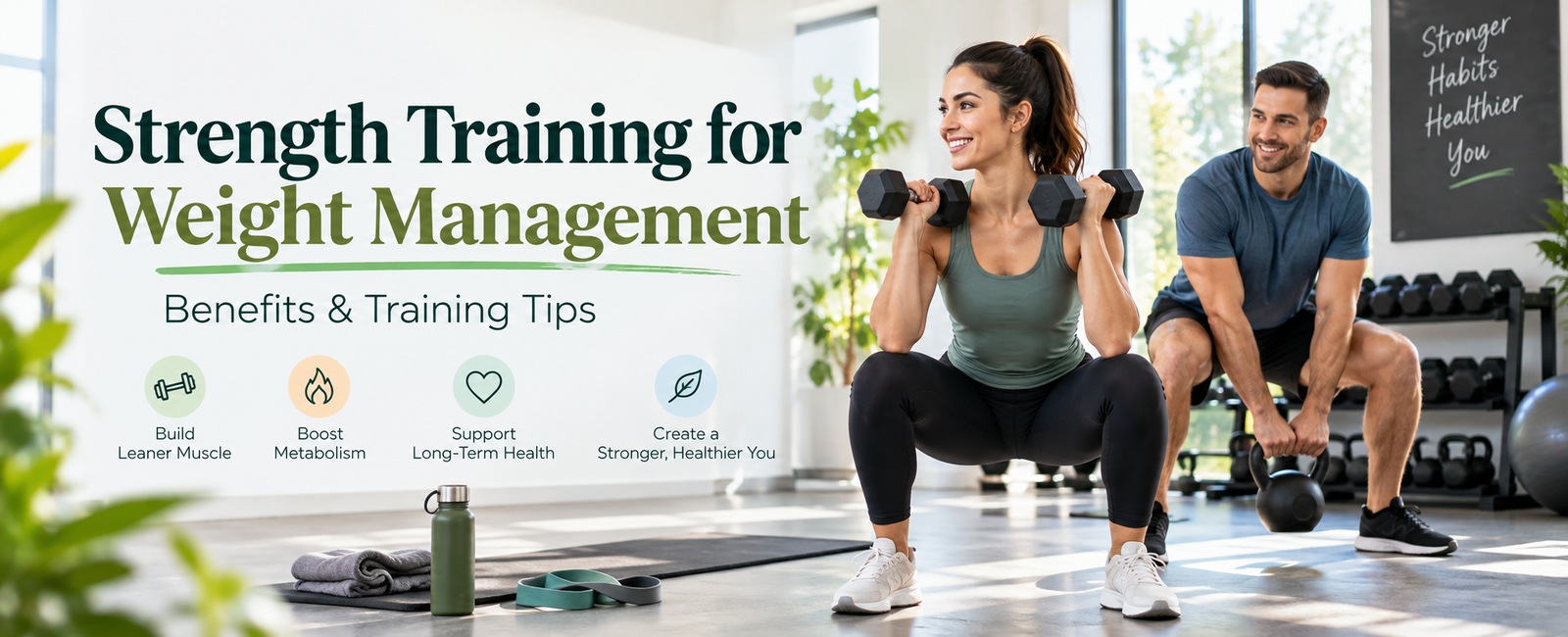
Strength training can be an important part of a sustainable weight management routine, but it is not a shortcut and it does not work in isolation. Long-term weight management is influenced by several factors, including nutrition, physical activity, sleep, recovery, daily movement, and habits you can maintain consistently.
The biggest advantage of strength training is that it does more than simply make a workout feel challenging. It helps develop strength, supports lean muscle, improves physical capacity, and can make everyday movement and other forms of exercise easier. In this guide, we will look at how strength training can support weight management, whether sweating means you are losing fat, how diet and exercise work together, how often you should train, and which exercises can form the foundation of an effective program.
How Strength Training Supports Weight Management
Strength training uses resistance to challenge your muscles, whether that resistance comes from dumbbells, machines, resistance bands, kettlebells, bodyweight exercises, or other equipment. When performed consistently, resistance training can improve muscular strength and support the maintenance or development of lean muscle.
This matters because successful weight management should not focus only on reducing the number on the scale. A better goal is to improve overall body composition, fitness, strength, movement quality, and your ability to stay active consistently. As you become stronger, everyday activities such as climbing stairs, carrying groceries, walking longer distances, or participating in recreational activities may also feel easier.
Does Sweating Mean You Are Losing Fat?
One of the most common misconceptions around exercise is that a workout is more effective when you sweat more. Sweating is primarily your body’s way of regulating temperature. When your body heats up during exercise, sweat helps cool you as it evaporates from your skin.
A very sweaty workout may cause the number on the scale to temporarily decrease because you have lost fluid, but that is not the same as losing body fat. Once those fluids are replaced, much of that temporary weight change returns. The amount you sweat can also vary depending on temperature, humidity, workout intensity, clothing, body size, and individual differences.
That means sweating should not be used as the main measure of whether a workout was successful. A better way to evaluate training is to look at your consistency, strength improvements, fitness, workout performance, and long-term progress. Staying appropriately hydrated is also important, particularly during longer workouts or exercise in warm conditions.
Diet vs. Exercise: What Matters More for Weight Management?
Diet and exercise are sometimes treated as if you have to choose between them, but in reality, they play different and complementary roles. Nutrition influences your overall energy intake and provides the protein, carbohydrates, fats, vitamins, minerals, and fluids your body needs. Exercise helps improve fitness, strength, endurance, and physical capacity while increasing the amount of activity you perform.
For many people, combining sustainable eating habits with regular physical activity is more practical than relying heavily on only one side of the equation. Extreme dieting can be difficult to maintain, while trying to compensate for eating habits with excessive workouts can also become unsustainable.
A better approach is to develop habits you can realistically continue. That may include eating balanced meals, including adequate protein, choosing fiber-rich foods, managing portions, staying hydrated, and remaining physically active throughout the week. Strength training then becomes one part of a broader lifestyle rather than a punishment for what you ate.
How Often Should You Exercise for Weight Management?
There is no single workout frequency that is right for everyone. Your ideal training schedule depends on your current fitness level, experience, goals, recovery, work schedule, and other physical activity. For general health, adults are generally advised to combine regular aerobic activity with muscle-strengthening activity on multiple days each week.
If you are new to training, two full-body strength training sessions per week can provide a realistic starting point. As your fitness and experience improve, you may choose to train three or more times per week depending on your goals. Cardiovascular activity can also be spread throughout the week through walking, jogging, cycling, swimming, or other activities you enjoy.
Daily movement also matters. The goal should be to create a routine you can recover from and maintain consistently rather than trying to make every workout long or intense.
Best Strength Exercises to Support Weight Management
There is no single exercise that automatically produces weight loss. Instead of searching for a “fat-burning” movement, focus on strength exercises that train major muscle groups, can be progressed over time, and fit your ability level.
Squats or Sit-to-Stand Exercises
Squat-based movements train the legs and hips and are closely related to everyday activities such as standing up from a chair. Beginners may start with a bodyweight sit-to-stand before progressing to goblet squats, dumbbell squats, or other variations.
Lunges and Split Squats
Lunges and split squats develop lower-body strength while challenging balance and coordination. The range of motion and resistance can be modified depending on your current ability and training experience.
Hip-Hinge Movements
Exercises such as Romanian deadlifts and other hinge variations train the hips, glutes, and posterior chain. Good technique is important, so beginners should first learn the movement with an appropriate amount of resistance.
Push Exercises
Push-ups, dumbbell presses, and machine presses can develop the chest, shoulders, and arms. The exercise should be selected based on your strength, comfort, and current training level.
Pull Exercises
Rows, resistance-band pulls, and machine-based pulling movements can strengthen the upper back and arms while helping create a balanced full-body program.
Walking and Cardiovascular Exercise
Walking may seem simple, but it can be one of the most practical ways to increase regular physical activity. Cycling, swimming, jogging, hiking, or other cardiovascular exercise can also complement your strength program and support overall fitness.
Why Progressive Overload Matters
Doing the exact same workout with the exact same resistance indefinitely may eventually stop providing enough challenge. Progressive overload means gradually increasing the demands of your training as your body adapts.
Progress does not always mean adding more weight every workout. You can also improve by performing another repetition, adding a set, improving your range of motion, slowing down a movement for better control, or progressing to a more challenging variation. For example, a beginner might start with a bodyweight squat and later add a light dumbbell as strength improves.
Strength Training and Cardio Work Better Together
Strength training and cardiovascular exercise do not need to compete with each other. They provide different benefits and can be combined within the same weekly routine. Strength training develops muscular strength and supports lean muscle, while cardiovascular exercise develops aerobic fitness and can increase the amount of movement you perform throughout the week.
Depending on your goals, your routine might include two or three strength sessions along with walking, running, cycling, or another cardiovascular activity. The balance should depend on what you enjoy, your training experience, and how well you recover.
A Simple Weekly Training Example
- Monday: Full-body strength training
- Tuesday: Brisk walk or moderate cardio
- Wednesday: Recovery or light activity
- Thursday: Full-body strength training
- Friday: Walking, cycling, jogging, or another cardio session
- Saturday: Optional recreational activity or mobility work
- Sunday: Rest or light movement
This is only an example. Your schedule can be adjusted around your lifestyle, fitness level, recovery, and training goals.
Nutrition Still Matters
Strength training can support weight management, but it cannot completely compensate for an eating pattern that consistently works against your goals. At the same time, sustainable nutrition does not need to mean extreme restriction.
A practical eating pattern may include adequate protein, vegetables and fruit, fiber-rich carbohydrate sources, healthy fats, and appropriate portions. Hydration also matters, particularly when you exercise regularly. If you need an individualized nutrition plan or have specific medical or dietary needs, working with an appropriately qualified healthcare or nutrition professional can provide more personalized guidance.
Recovery Is Part of the Program
More training is not always better. Your body needs time to adapt to exercise, which is why sleep, rest days, appropriate nutrition, hydration, and lower-intensity activity all play an important role in recovery.
If you constantly add workouts without allowing enough recovery, your performance may begin to decline. You may also notice persistent fatigue, reduced motivation, or soreness that does not improve between sessions. A good training program balances challenge with recovery rather than trying to make every day difficult.
How to Measure Progress Beyond the Scale
Body weight can fluctuate for many reasons, including hydration, food intake, and normal day-to-day changes. That is why the scale should not be your only measure of progress.
You can also monitor improvements in:
- Strength
- Workout consistency
- Walking or running capacity
- Exercise technique
- Waist measurements
- Clothing fit
- Energy levels
- How everyday activities feel
Being able to perform more controlled repetitions with the same weight is progress. Walking up a hill with less fatigue is progress. Training consistently for several weeks when you previously struggled to maintain a routine is also progress.
Common Weight-Management Training Mistakes
Trying to Burn as Many Calories as Possible in Every Workout
Training should have a purpose beyond simply making yourself tired. A structured program balances strength, cardiovascular fitness, recovery, and progression.
Believing More Sweat Means a Better Workout
Sweat is mainly a temperature-regulation response, not a direct measure of body-fat loss. A less sweaty workout can still be highly effective.
Doing Only Cardio
Cardio can be valuable, but adding resistance training helps create a more balanced fitness program by supporting strength and lean muscle.
Increasing Training Too Quickly
Going from very little activity to intense workouts every day can make consistency difficult. Start with a manageable routine and increase training gradually.
Ignoring Recovery
Rest is not wasted time. It is part of the process that allows you to continue training consistently and progress over time.
Expecting One Exercise to Target Fat Loss
Exercises strengthen and train muscles, but you cannot choose exactly where your body will lose fat first. Focus on overall habits instead of exercises promising to reduce fat from one specific area.
How Personal Training Can Help
Personal training can help remove some of the guesswork around exercise selection, technique, progression, and building a realistic weekly routine. A coach can help you choose exercises suited to your current ability, improve exercise technique, track progress, and adjust your program as your fitness changes.
At Run Fit Well, coach Edvandro Oliveira works with clients to build practical training programs around their individual goals, experience, schedule, and current fitness level. For clients focused on weight management, the emphasis is on sustainable improvements in strength, fitness, consistency, and overall physical activity rather than quick-fix workout approaches.
Strength Training With Run Fit Well
At Run Fit Well, personal training is built around the individual rather than a one-size-fits-all workout. Depending on your needs, sessions may include strength training, cardiovascular conditioning, mobility work, balance exercises, and general fitness coaching.
With guidance from Edvandro Oliveira, your program can be adjusted according to your fitness level, training experience, schedule, and goals. The objective is to create a routine that challenges you appropriately while remaining realistic enough to maintain over time.
Final Thoughts
Strength training can be a valuable part of weight management, but its benefits extend far beyond the scale. It can help you become stronger, maintain or develop lean muscle, improve physical capacity, and build a foundation for a more active lifestyle.
Instead of focusing on excessive sweating, extreme workouts, or quick fixes, focus on consistent strength training, regular cardiovascular activity, sustainable nutrition, adequate recovery, and gradual progression. The most effective program is the one you can maintain long enough to make meaningful progress.
Does strength training help with weight management?
Strength training can support weight management by helping develop or maintain lean muscle, improving strength, and contributing to an active lifestyle. Nutrition, cardiovascular activity, recovery, and overall habits also matter.
Does strength training help with weight management?
No. Sweating mainly helps regulate body temperature. Heavy sweating can cause temporary fluid loss, but that is different from losing body fat.
How many days per week should I strength train?
Many people can begin with two muscle-strengthening sessions per week and adjust frequency based on their experience, goals, schedule, and recovery.
Is cardio or strength training better for weight management?
They serve different purposes and can work well together. Strength training supports muscular strength and lean muscle, while cardiovascular exercise develops aerobic fitness and increases overall activity.
What are the best strength exercises for beginners?
Simple strength exercises such as squats or sit-to-stands, rows, presses, lunges, hip-hinge exercises, and appropriately selected core movements can provide a strong starting point.
Can Run Fit Well help me build a strength-training plan?
Yes. Run Fit Well offers personalized coaching, and Edvandro Oliveira can help structure training around your current fitness level, goals, schedule, and experience.
Does strength training help with weight management?
Strength training can support weight management by helping develop or maintain lean muscle, improving strength, and contributing to an active lifestyle. Nutrition, cardiovascular activity, recovery, and overall habits also matter.