Youth Strength & Resistance Training in San Francisco: A Complete Parent’s Guide
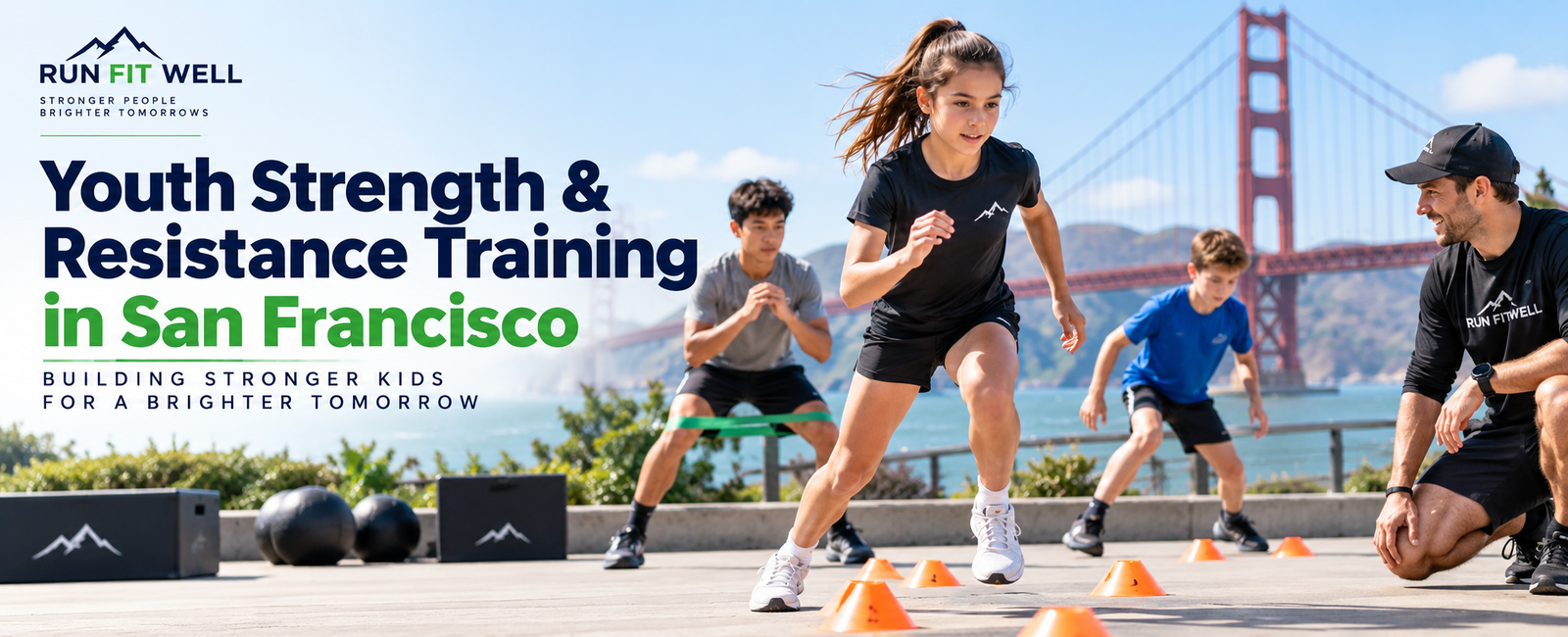
Youth Strength & Resistance training helps kids and teenagers develop strength, coordination, balance, and confidence through age-appropriate exercises.
Youth fitness is not about turning children into bodybuilders. It focuses on movement quality, healthy development, and positive exercise habits.
For families in San Francisco, Youth Strength & Resistance training offers a structured approach to improving physical fitness and athletic skills.
A well-designed program prioritizes proper technique, qualified supervision, and gradual progression instead of lifting the heaviest possible weights.
At Run Fit Well, coach Edvandro Oliveira works with young athletes and active kids.
Training programs can be adapted to their age, experience, movement ability, sports participation, and individual goals.
This guide explains youth resistance training, its benefits, safety considerations, suitable exercises, and how parents can choose appropriate training.
What Is Youth Strength & Resistance Training?
Youth Strength & Resistance training develops muscular strength, coordination, and movement control through supervised, age-appropriate resistance exercises.
Resistance does not always mean lifting heavy weights. Children can develop strength using bodyweight movements and suitable training equipment.
A youth training session may include:
- Bodyweight exercises
- Resistance band movements
- Light dumbbell exercises
- Medicine ball activities
- Balance and coordination drills
- Controlled jumping and landing
- Agility exercises
The goal is to teach young people how to move correctly before introducing additional resistance.
Proper technique, supervision, confidence, and gradual development should remain more important than how much weight a child can lift.
Why Is Exercise Important for Kids?
Regular physical activity supports children’s physical development and overall well-being.
Exercise provides opportunities to improve muscular strength, endurance, balance, coordination, and movement confidence.
It also helps children become more comfortable participating in sports, recreational activities, and everyday physical tasks.
According to the CDC physical activity guidelines for children, children ages 6–17 should get at least 60 minutes of physical activity daily.
The CDC also recommends including muscle-strengthening activities on at least three days each week.
These recommendations concern overall physical activity. They do not require children to complete three formal weightlifting workouts every week.
Developing a positive relationship with movement is especially important during childhood.
Exercise should be enjoyable, appropriate for the child’s development, and challenging without creating unnecessary pressure.
Benefits of Youth Strength & Resistance Training
A properly structured Youth Strength & Resistance program can support several areas of physical development.
Potential benefits include improved muscular strength, coordination, balance, confidence, and physical preparation for sports.
Improved Muscular Strength
Age-appropriate resistance exercises help children develop muscular strength and improve their ability to perform physical activities.
Better Balance and Coordination
Controlled movements help young athletes practice maintaining balance while moving their arms, legs, and body.
Improved Athletic Movement
Strength development can complement running, jumping, acceleration, and change-of-direction activities.
Greater Movement Confidence
Learning new movement skills may help children feel more confident when participating in exercise and sports.
Healthy Exercise Habits
Positive training experiences can encourage young people to develop an interest in regular physical activity.
The purpose of Youth Strength & Resistance training should be sustainable development rather than short-term performance results.
Is Youth Strength & Resistance Training Safe for Kids?
Youth Strength & Resistance training can be appropriate when exercises and resistance levels match the child’s physical abilities.
Qualified supervision, clear instructions, and gradual progression are essential parts of a well-designed program.
The American Academy of Pediatrics strength-training guidance emphasizes appropriate supervision and technique.
A youth training program should include:
- Age-appropriate exercises
- Qualified supervision
- Clear coaching instructions
- Controlled resistance
- Proper exercise technique
- Gradual progression
- Adequate recovery
- Realistic expectations
Children should not feel pressured to compete over how much weight they can lift.
Maximum lifting attempts and excessive resistance should not be central features of beginner youth programs.
Quality of movement should come before training load.
Youth Strength & Resistance Training in San Francisco
Families seeking Youth Strength & Resistance training in San Francisco may have different goals.
Some children want to improve their fitness for soccer, basketball, baseball, or running.
Others may benefit from developing general strength, coordination, balance, and movement confidence.
A youth strength training program may include:
- Bodyweight squats
- Step-ups
- Lunges
- Hip-hinge movements
- Push-ups
- Rows
- Glute bridges
- Farmer carries
- Core exercises
- Balance drills
Each exercise should be selected according to the child’s movement ability and experience.
Beginners can start with basic bodyweight movements before gradually progressing to suitable external resistance.
A balanced program should develop skills that transfer across multiple sports and recreational activities.
Core Exercises for Kids
Core training is an important component of Youth Strength & Resistance programs.
Core stability supports posture, balance, running, jumping, throwing, and general athletic movement.
Training should emphasize controlled movement instead of performing large numbers of sit-ups.
Useful core exercises for kids include:
- Planks
- Side planks
- Dead bugs
- Bird dogs
- Bear crawls
- Farmer carries
- Pallof presses
- Controlled crawling exercises
These exercises help children practice stabilizing their bodies while moving their arms and legs.
Core stability exercises can complement sports training and everyday movement.
Speed and Agility Training for Kids
Speed and agility exercises can complement Youth Strength & Resistance training.
These activities develop acceleration, coordination, reaction, balance, and controlled changes of direction.
Young athletes should learn how to accelerate, slow down, and change direction before attempting advanced drills.
Examples include:
- Short acceleration runs
- Cone drills
- Shuttle runs
- Lateral movement exercises
- Reaction drills
- Skipping exercises
- Controlled jumping
- Change-of-direction drills
Movement quality and coordination should be more important than performing every drill at maximum speed.
Good agility requires balance, body awareness, and the ability to move with control.
Sports Conditioning for Kids
Sports conditioning prepares young athletes for the physical demands of their activities.
A balanced program may combine strength, speed, endurance, agility, mobility, coordination, and recovery.
The exact training approach depends on the child’s sport and current experience.
A soccer player may benefit from acceleration, running mechanics, and change-of-direction exercises.
A baseball player may focus on rotational movement, coordination, general strength, and acceleration.
Youth Strength & Resistance exercises can support sports conditioning when both are planned appropriately.
Young athletes often benefit from developing multiple physical abilities rather than focusing only on one sport-specific movement.
Youth Athletic Training in San Francisco
Youth athletic training should prioritize fundamental movement skills before advanced athletic performance.
A well-rounded program may include:
- Running mechanics
- Jumping and landing
- Acceleration and deceleration
- Strength development
- Balance training
- Coordination exercises
- Agility drills
- General conditioning
These activities provide movement experiences that can transfer to different sports and recreational activities.
Exercise variety is particularly useful for younger athletes.
It allows them to practice different movement patterns instead of repeating the same drills every session.
How Often Should Kids Exercise?
The appropriate exercise frequency depends on age, experience, sports schedules, school commitments, and recovery requirements.
A child who already participates in several sports practices may need fewer additional structured workouts.
For Youth Strength & Resistance training, a few well-planned sessions may be more useful than intense daily workouts.
Parents and coaches should consider:
- Existing sports commitments
- Training experience
- Recovery between sessions
- Sleep and nutrition
- School responsibilities
- Free play and recreation
- Individual preferences
Training should fit into the child’s overall routine without creating unnecessary physical or scheduling demands.
Fitness Activities for Kids
Children do not need formal workouts to develop every aspect of fitness.
Recreational activities provide valuable opportunities to develop strength, coordination, endurance, and movement confidence.
Examples include:
- Running games
- Cycling
- Swimming
- Hiking
- Jump rope
- Team sports
- Playground activities
- Bodyweight circuits
- Relay races
- Agility games
These activities can complement structured Youth Strength & Resistance training.
Variety can keep children interested while introducing different types of physical movement.
The best activities are often those children enjoy and want to continue.
Injury Prevention for Young Athletes
No training program can eliminate every possibility of injury.
However, good movement instruction and appropriate workload management can support physical preparation.
A thoughtful Youth Strength & Resistance program should emphasize movement quality, gradual progression, and recovery.
Important areas include:
- Proper warm-ups
- Correct exercise technique
- Appropriate resistance
- Balance training
- Landing mechanics
- Controlled changes of direction
- Adequate rest
- Avoiding sudden workload increases
Young athletes should understand that sharp or persistent pain should not be ignored.
If pain changes how a child runs, jumps, or moves, the activity should be stopped or modified.
Medical guidance may be appropriate when pain persists or causes concern.
Teaching Kids How to Jump and Land
Jumping and landing are important movement skills for many youth sports.
Children should learn to land with control before moving to more advanced jumping activities.
Coaching may emphasize:
- Controlled landings
- Balanced foot positioning
- Knee alignment
- Stable posture
- Controlled deceleration
These skills complement Youth Strength & Resistance exercises and general athletic development.
They can help young athletes improve balance, coordination, and movement confidence.
Strength Training vs. Sports Conditioning
Strength training and sports conditioning are related but serve different purposes.
Strength training focuses on muscular strength and movement control.
Sports conditioning prepares athletes for the wider physical demands of their activities.
For example, a young soccer player may perform squats and lunges to develop strength.
They may also practice running, acceleration, and agility to prepare for soccer-specific movement.
Both approaches can be included in a balanced Youth Strength & Resistance and athletic development program.
The training balance should reflect the child’s experience, goals, and existing sports schedule.
Age-Appropriate Youth Strength & Resistance Training
Youth Strength & Resistance training should evolve as children develop physically and gain movement experience.
Age is only one factor. Maturity, coordination, experience, and the ability to follow instructions also matter.
Training for Younger Children
Younger children often benefit from enjoyable activities that improve basic movement skills.
Suitable activities may include:
- Bodyweight exercises
- Balance games
- Running and skipping
- Simple jumping activities
- Coordination drills
- Age-appropriate resistance exercises
The priority is developing confidence, coordination, and enjoyment of physical activity.
Training for Pre-Teens and Early Teens
Pre-teens and early teenagers may gradually begin more structured training sessions.
Training may include:
- Strength fundamentals
- Basic resistance exercises
- Core stability
- Running mechanics
- Agility drills
- Jumping and landing practice
Proper technique should remain more important than resistance level.
Training for Older Teens
Older teens with appropriate movement skills may progress toward more structured resistance training.
Exercises may include:
- Squat variations
- Deadlift variations
- Split squats
- Pressing exercises
- Rows
- Plyometric exercises
- Speed training
- Sport-specific conditioning
Progression should depend on training experience, exercise technique, and qualified supervision.
Sample Youth Strength & Resistance Training Session
A beginner Youth Strength & Resistance session should combine movement preparation, strength exercises, coordination, and recovery.
The following example shows how a youth fitness session might be structured.
1. Warm-Up
- Light jogging
- Skipping
- Dynamic movement
- Mobility drills
The warm-up introduces comfortable movement and prepares participants for the session.
2. Movement and Agility
- Short accelerations
- Cone changes of direction
- Balance drills
These activities focus on coordination, movement control, and athletic skills.
3. Strength Training
- Bodyweight squats
- Step-ups
- Push-ups
- Rows
- Glute bridges
- Carries
Exercises should be adapted to the child’s ability with suitable supervision and rest.
4. Core Training
- Planks
- Dead bugs
- Side planks
Core exercises should emphasize comfortable positioning and controlled movement.
5. Conditioning or Games
- Relay runs
- Short movement circuits
- Sport-based games
Enjoyable movement activities can maintain engagement while developing general fitness.
The session should match the child’s age, experience, attention span, ability, and sports schedule.
Common Youth Strength & Resistance Training Mistakes
Parents and coaches should understand common mistakes when planning Youth Strength & Resistance programs.
Using Adult Workout Programs
Children should not simply follow smaller versions of adult bodybuilding programs.
Youth training should prioritize movement quality, coordination, and appropriate progression.
Adding Too Much Weight Too Soon
Resistance should increase only when a child demonstrates good technique and movement control.
Progressing too quickly can reduce exercise quality.
Making Every Session Exhausting
A workout does not need to leave a young athlete completely exhausted to be effective.
Training challenges should be appropriate and balanced with recovery.
Ignoring Recovery
Young athletes need adequate recovery between sports practices, games, and structured training sessions.
More exercise is not automatically better when overall activity demands are already high.
Specializing Too Early
Developing a wide range of movement skills can benefit young athletes.
General athletic development is particularly valuable during the early stages of training.
How a Youth Fitness Coach Can Help
A qualified youth fitness coach can help children learn exercise techniques and progress gradually.
Professional supervision is valuable when introducing Youth Strength & Resistance exercises to beginners.
Coaching may include:
- Movement assessment
- Exercise instruction
- Technique feedback
- Age-appropriate progression
- Strength development
- Speed and agility training
- Sports conditioning
- Balance and coordination exercises
The goal is to help young athletes become more confident, capable, and independent.
Training should develop sustainable movement skills rather than simply making every workout harder.
Youth Strength & Resistance Training With Run Fit Well
At Run Fit Well, Youth Strength & Resistance training is designed around individual needs.
Coach Edvandro Oliveira works with young athletes and active kids to develop programs based on their current ability and goals.
Training may include:
- Strength development
- Running mechanics
- Speed and agility
- Balance and coordination
- Core exercises
- Movement fundamentals
- Sports conditioning
The objective is to create a supportive environment where young athletes can develop movement skills, strength, and confidence.
Parents interested in youth fitness coaching can explore Run Fit Well’s training services.
Final Thoughts on Youth Strength & Resistance Training
Youth Strength & Resistance training can help children and teenagers develop a foundation for sports and long-term physical activity.
Effective programs focus on more than muscular strength.
They also emphasize coordination, balance, movement quality, confidence, and positive exercise habits.
Whether children are preparing for sports or developing general fitness, training should match their age, abilities, and interests.
With appropriate supervision and gradual progression, Youth Strength & Resistance training can become a valuable part of an active lifestyle.
Frequently Asked Questions
Is Youth Strength & Resistance training safe for kids?
Yes. Youth Strength & Resistance training can be appropriate when exercises, resistance, and supervision match a child’s abilities.
What age can kids start strength training?
There is no single starting age. A child should be able to follow instructions and perform basic exercises with control.
How often should kids strength train?
Training frequency depends on age, experience, sports commitments, and recovery. A few appropriate sessions may be sufficient.
Can strength training help young athletes?
Yes. Supervised training can support strength, coordination, balance, and general athletic development.
What are good strength exercises for kids?
Squats, step-ups, lunges, push-ups, rows, glute bridges, carries, and basic core exercises can be useful.
Does Run Fit Well offer youth strength training in San Francisco?
Yes. Run Fit Well offers youth fitness and athletic training with coach Edvandro Oliveira.