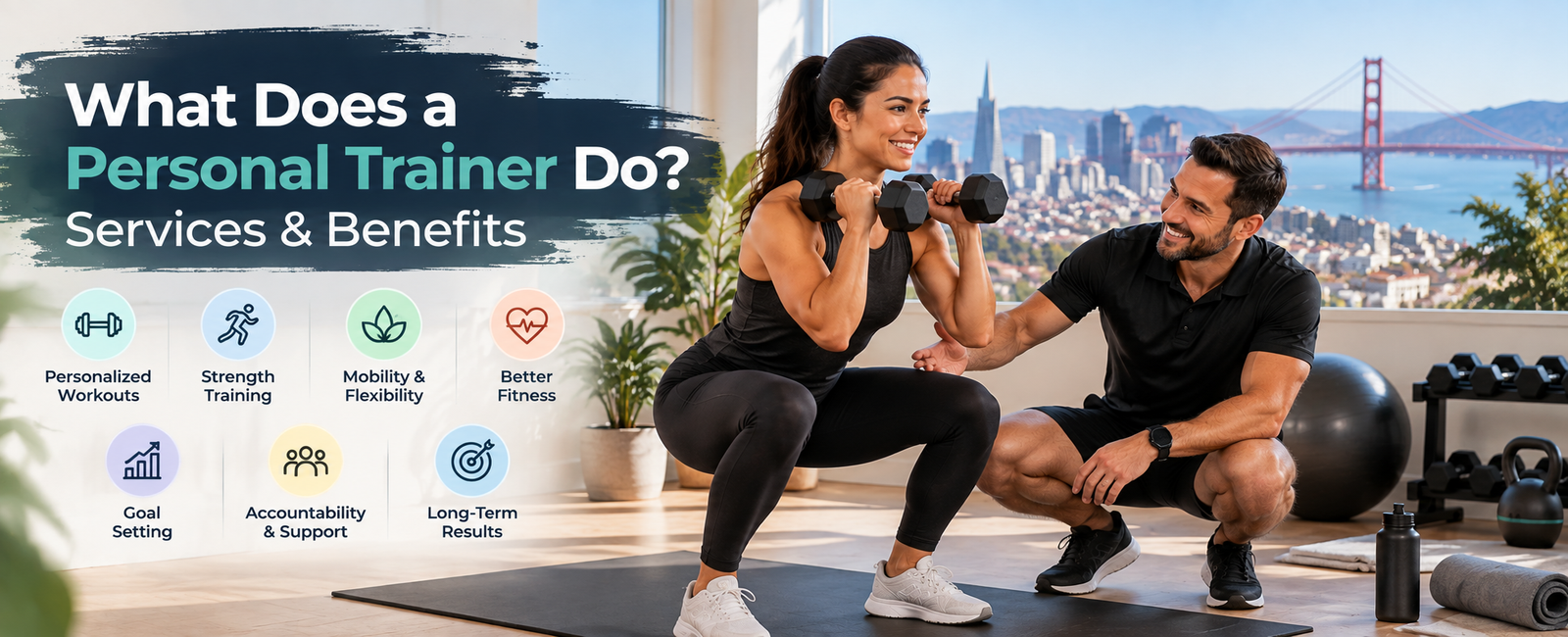
Hiring a personal trainer is not only about having someone count repetitions or create a workout routine. A good trainer helps you understand how to exercise, how to progress, and how to build a fitness routine that matches your goals, schedule, and current fitness level.
Whether you are completely new to exercise, returning after a long break, or trying to improve your strength and overall fitness, working with a personal trainer can give your training more structure and direction. At Run Fit Well, coach Edvandro Oliveira works with clients to create personalized fitness programs based on their experience, movement needs, lifestyle, and goals.
What Does a Personal Trainer Do?
A personal trainer helps plan, guide, and adjust your workouts. Instead of following a random routine, your training is organized around what you actually want to achieve.
A trainer may help you build strength, improve mobility, increase endurance, improve balance, learn proper exercise technique, stay consistent, return to exercise safely, and support general fitness or weight-management goals. The exact service depends on your needs, because one client may want to become stronger while another may want better mobility, more confidence, or a more active lifestyle.
1. Fitness Assessment and Goal Setting
One of the first services you can expect from a personal trainer is an assessment of your current fitness level. This does not always mean complicated testing. A trainer may ask about your current activity level, previous exercise experience, fitness goals, daily schedule, previous injuries or limitations, exercises you enjoy or dislike, and available equipment.
They may also observe basic movements such as squatting, balancing, walking, pushing, pulling, or core control. This information helps the trainer understand your starting point before building your program.
2. Personalized Workout Planning
One of the biggest benefits of working with a trainer is having a personalized workout plan. Generic fitness plans are designed for a broad audience, while personal training can be adjusted specifically for your goals, experience, schedule, and movement ability.
Your plan may include strength training, cardiovascular exercise, mobility work, core exercises, balance training, functional movements, and recovery days. The workout structure can also change as you become stronger or more experienced, so your program continues to progress with you.
3. Strength Training
Strength training is a common part of personal training because it supports overall fitness and everyday movement. Depending on your fitness level, exercises may include squats, lunges, step-ups, deadlift variations, push-ups, rows, shoulder presses, glute bridges, and core exercises.
A trainer can help you choose appropriate exercises and gradually increase the difficulty as your ability improves. The goal is not to make every session exhausting, but to create enough challenge to support steady progress.
4. Exercise Technique and Form Guidance
Learning proper exercise technique is an important part of personal training. A trainer can show you how an exercise should be performed and give feedback while you are doing it.
They may help with body position, range of motion, breathing, tempo, stability, and exercise setup. This can be especially useful for beginners who feel unsure about gym equipment or strength exercises, and clear technique also makes it easier to understand what each movement should feel like.
5. Mobility and Flexibility Training
Personal training does not have to focus only on strength. Mobility and flexibility can also be included depending on your needs and lifestyle.
A trainer may work on areas such as the hips, ankles, shoulders, upper back, hamstrings, and general joint movement. Mobility training can be especially useful for people who spend long hours sitting, older adults, runners, or clients who feel stiff during everyday movement.
6. Balance and Stability Exercises
Balance becomes increasingly important as we get older, but it can benefit people at many fitness levels. A personal trainer may include exercises that challenge single-leg balance, coordination, core stability, lower-body control, and movement confidence.
These exercises may be particularly useful in personal training for seniors, where maintaining strength and balance can support everyday movement and independence.
7. Cardiovascular Conditioning
A personal trainer can also help improve cardiovascular fitness. Cardio does not always mean spending a long time on a treadmill.
Depending on your fitness level and goals, conditioning may include walking, cycling, running, step exercises, low-impact circuits, interval training, or bodyweight conditioning. The intensity should match your current ability, and a good trainer will not make every workout high intensity simply because it feels harder.
8. Support for Weight Management
Personal training can support weight-management goals by helping you exercise consistently and build a sustainable routine. Your workouts may combine strength training, cardiovascular exercise, and general movement.
However, exercise is only one part of weight management. Nutrition, sleep, stress, daily activity, and long-term habits also influence results. A responsible trainer should avoid unrealistic promises and instead focus on habits that can be maintained over time.
9. Accountability and Motivation
Knowing what to do is often easier than actually doing it consistently. This is where accountability can make a real difference.
Having scheduled sessions with a trainer can help you stay committed to your fitness routine. A trainer can also help you stay focused when motivation drops, so your progress depends less on how motivated you feel on any particular day.
10. Progress Tracking
A personal trainer should help you understand whether your program is working. Progress can be measured in many ways, including increased strength, better exercise technique, improved endurance, greater mobility, better balance, more consistent training, increased confidence, and improved workout capacity.
Progress does not always need to be measured by body weight. For many people, improvements in strength, movement quality, consistency, and confidence are equally important.
11. Workout Adjustments
A training plan should not remain fixed forever. Your program may need to change because of progress, schedule changes, fatigue, travel, equipment availability, exercise preferences, or new fitness goals.
A trainer can adjust exercises, volume, intensity, or workout frequency when needed. This flexibility is one of the main benefits of personalized personal training.
12. Training for Beginners
If you are new to exercise, a personal trainer can make the process much easier to understand. Beginners often have questions about which exercises to do, how much weight to use, how many days to train, how long workouts should be, and when to increase the difficulty.
A trainer can answer these questions and build a manageable starting plan. The goal should be to help you develop confidence and good habits rather than overwhelm you with complicated exercises.
13. Personal Training for Older Adults
Older adults may have different priorities than younger clients. Training may focus more on strength, balance, mobility, coordination, everyday movement, and maintaining independence.
Exercises can be modified based on current ability and comfort. An experienced trainer should understand that progress does not look the same for every client and should adjust the program accordingly.
14. In-Home Personal Training
Some trainers also provide in-home personal training, allowing you to exercise in your own home instead of traveling to a gym. This can be useful for people who have busy schedules, prefer greater privacy, want to avoid commuting, work from home, feel uncomfortable in gyms, or prefer one-on-one attention.
Home workouts can include bodyweight exercises and simple equipment such as dumbbells, resistance bands, mats, and kettlebells. You do not necessarily need a full home gym to have an effective training session.
15. Running and Fitness Support
For runners, personal training can complement running by improving strength, mobility, stability, and general conditioning. A trainer may include exercises for lower-body strength, core control, single-leg stability, hip strength, calf strength, and mobility.
At Run Fit Well, personal training can also work alongside running coaching depending on the client’s goals, making it easier to build a more complete fitness and performance program.
How Often Should You Work With a Personal Trainer?
There is no single answer. Some people work with a trainer once per week, while others prefer two or three sessions. The right frequency depends on your goals, fitness level, schedule, budget, and ability to train independently.
For example, you might work with a trainer twice per week and complete an additional workout on your own. As your confidence and experience grow, the structure can be adjusted.
What Should You Expect From a Good Personal Trainer?
A good personal trainer should do more than make workouts difficult. They should take time to understand your needs, explain exercises clearly, monitor your technique, adjust workouts when needed, progress training gradually, include recovery, communicate well, and create realistic expectations.
Training should feel personalized rather than like the same standard routine is being repeated with every client.
Personal Training With Run Fit Well
At Run Fit Well, personal training is designed around the individual rather than a one-size-fits-all program. Coach Edvandro Oliveira works with clients at different fitness levels and helps build practical training around their goals, current abilities, schedule, and movement needs.
Depending on the client, training may include strength, mobility, balance, conditioning, core work, functional movement, and general fitness. The aim is to create a program that is challenging enough to support progress but realistic enough to maintain consistently.
Final Thoughts
So, what services can you expect from a personal trainer? A trainer can help with much more than simply leading a workout. They can assess your starting point, create a personalized exercise plan, teach proper technique, build strength, improve mobility, support cardiovascular fitness, track your progress, adjust your program, and provide accountability.
The most valuable part of personal training is personalization. Instead of guessing what exercises to do or following a generic routine, you have a structured plan built around your needs. A good personal trainer should help you become stronger, more confident, and more capable of maintaining an active lifestyle over time.
Frequently Asked Questions
What services does a personal trainer provide?
A personal trainer may provide fitness assessments, personalized workout planning, strength training, mobility work, cardiovascular conditioning, exercise technique guidance, progress tracking, and accountability.
Do personal trainers only help with weight loss?
No. Personal trainers can help with strength, mobility, endurance, balance, general fitness, exercise technique, and many other goals.
Is personal training suitable for beginners?
Yes. Beginners often benefit from personal training because exercises can be taught gradually and adjusted to their current fitness level.
Can seniors work with a personal trainer?
Yes. Personal training for older adults can focus on strength, mobility, balance, coordination, and everyday movement.
Can a personal trainer come to my home?
Some trainers provide in-home personal training. This can be useful for clients who prefer privacy, convenience, and one-on-one training without traveling to a gym.
How often should I see a personal trainer?
The ideal frequency depends on your goals, experience, schedule, and ability to train independently. Some clients train once per week, while others work with a trainer two or three times per week.
Does Run Fit Well offer personalized personal training?
Yes. Run Fit Well provides personalized personal training, and Edvandro Oliveira can build sessions around your fitness level, schedule, goals, and movement needs.