If you’re reading this, you probably want a smart, safe way to keep your heart strong, joints happy, and balance steady without excessive impact. That’s exactly what low impact cardio for seniors is designed to support.
As a coach who works with older adults around San Francisco, Edvandro Oliveira has seen how a carefully designed low-impact routine can help rebuild confidence, support daily movement, and improve overall energy. This guide explains what low-impact cardio is, why it can be useful for older adults, and how to include it in a sustainable fitness routine.
What Is Low Impact Cardio?
Low-impact cardio is any aerobic activity that raises your heart rate and breathing while minimizing jarring forces through the joints, including the knees, hips, ankles, and spine. The “low-impact” label usually means at least one foot remains in contact with the ground at all times, or the activity uses external support such as water or a chair to reduce bodyweight load.
Common examples include walking, cycling, water-based exercise, seated march routines, and gentle dance. The goal is to create a steady cardiovascular stimulus using predictable and controlled movement patterns, making these activities practical for older adults who want to stay active without unnecessary impact.
Low Impact vs. High Impact: The Difference
High-impact activities such as running, jumping rope, and plyometrics create greater repetitive force through the body. Low-impact cardio provides cardiovascular activity with less impact on the joints while still allowing you to work at a steady and productive intensity.
- High impact: Faster, higher-force movements with greater joint loading.
- Low impact: Lower-impact movements with sustained effort and controlled progression.
Why Low Impact Cardio Matters for Seniors
Low impact cardio for seniors is not simply an easier alternative to exercise. It can be an effective way to support cardiovascular fitness, mobility, balance, and everyday activity while keeping joint stress manageable.
Benefits for Heart, Joints, Balance, and Mood
- Heart and circulation: Regular moderate aerobic activity can support cardiovascular fitness and circulation while helping older adults remain active during daily tasks.
- Joint movement: Gentle and controlled activity may help reduce stiffness and keep the joints moving. Water exercise and cycling are particularly low-impact options for the knees and hips.
- Balance and stability: Many low-impact exercises also involve stabilizer muscles, coordination, and body awareness.
- Mood and sleep: Regular movement can support general well-being and help make physical activity a consistent part of everyday life.
How Low Impact Differs From High-Impact Cardio
Low-impact training generally emphasizes steady, repeatable movement patterns and moderate exercise intensity. High-impact exercise often involves faster movements, jumping, or greater forces through the body.
Both styles can provide cardiovascular benefits, but low-impact training is often more practical for older adults whose priorities include maintaining mobility, daily function, consistency, and long-term fitness.
Top Low Impact Cardio Options for Seniors
There are many practical ways to include low-impact cardio in your weekly routine. Choose two or three activities you enjoy and rotate them to keep your program varied and manageable.
Brisk Walking
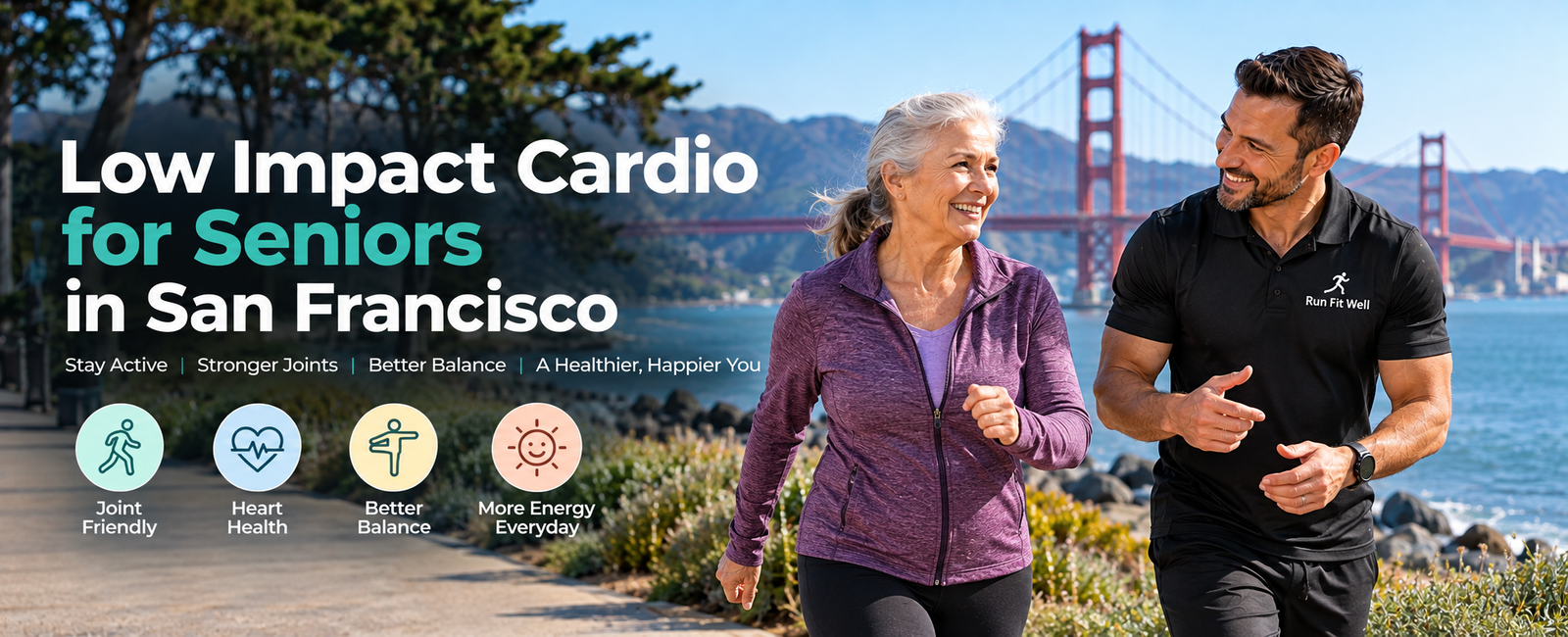
Walking is one of the most accessible forms of low impact cardio. In San Francisco, flatter routes can be easier to manage when steep hills feel uncomfortable. On days when weather or balance is a concern, treadmill or indoor walking can be useful alternatives.
- Use supportive and comfortable shoes.
- Start with around 10 minutes and gradually add time.
- Consider walking poles if additional stability feels helpful.
Water Walking and Aqua Aerobics
Water reduces weight-bearing forces while providing natural resistance. This can make water-based exercise a useful option for older adults who prefer gentler movement.
- Chest-deep water may provide useful support.
- Pool noodles or water weights can add progression.
- Warm-water sessions may feel more comfortable for people with stiffness.
Stationary and Recumbent Cycling
Stationary and recumbent bikes allow you to control resistance while reducing impact through the lower body. Recumbent cycling may also feel more comfortable for people who prefer additional back support.
- Adjust the seat so the knee remains slightly bent at full pedal extension.
- Maintain a steady and comfortable cadence.
- Begin with 10–15 minutes and gradually build toward longer sessions.
Chair-Based Cardio and Seated Marches
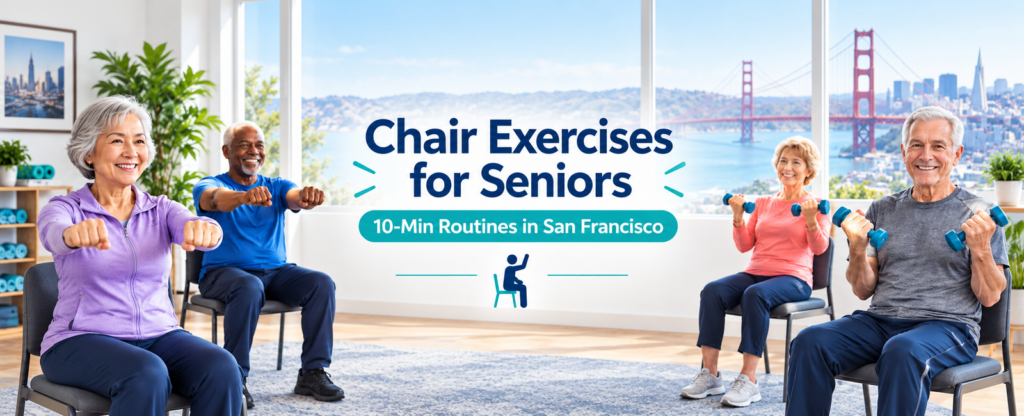
Chair cardio can be useful when prolonged standing is uncomfortable or balance is limited. Seated marches, seated jacks, arm movements, and resistance-band exercises can help increase activity while providing additional stability.
- Keep the spine tall and feet positioned securely.
- Combine arm and leg movements to increase the cardiovascular demand.
Tai Chi, Qigong, and Gentle Yoga
These low-impact movement practices combine controlled movement, breathing, balance, and mobility. They can complement other forms of cardiovascular exercise and may be especially useful for older adults who want to improve movement confidence.
- Look for classes designed specifically for seniors or beginners.
- Practice consistently to become more comfortable with the movements.
Low-Impact Dance and Social Cardio
Low-impact dance classes designed for older adults can combine cardiovascular activity with social interaction. Choosing a class without complicated jumps or fast directional changes can make the activity easier to follow.
- Look for classes labeled “low impact” or “senior friendly.”
- Choose activities that feel enjoyable enough to maintain consistently.
How to Build a Safe, Effective Low-Impact Cardio Session
A simple low-impact cardio session can be divided into three parts: a warm-up, main workout, and cool-down. This structure makes the session easier to follow and provides a gradual transition into and out of exercise.
Warm-Up: 5–7 Minutes
The purpose of the warm-up is to gradually increase movement, prepare the joints, and get the body ready for the main workout.
- Gentle marching for 1–2 minutes, seated or standing.
- Arm circles and shoulder rolls for approximately 1 minute.
- Ankle pumps and hip marches for approximately 2 minutes.
- Dynamic side steps or slow heel digs for 1–2 minutes.
Main Workout
The main part of your workout can use steady-state exercise, intervals, or a circuit depending on your goals and current fitness.
- Steady-state: Maintain a comfortable, moderate pace for 15–30 minutes using walking or cycling.
- Intervals: Alternate 1–2 minutes at a moderate pace with 30–60 seconds at a slightly quicker pace.
- Circuit: Rotate through several low-impact movements, such as seated marches, step-touches, sit-to-stands, side leg lifts, band rows, and heel raises.
Cool-Down and Mobility
Finish with approximately 5–7 minutes of easier movement and gentle mobility work to gradually lower the intensity.
- Slow marching for approximately 1 minute.
- Seated hamstring stretch.
- Calf stretch and chest-opening movements.
- Slow breathing for 1–2 minutes.
4-Week Beginner Low Impact Cardio Plan
The following progression provides a simple starting point for beginners who want to build confidence and exercise consistency gradually.
Week 1 — Foundation
Complete approximately three sessions per week lasting 10–15 minutes each. A session might include a five-minute warm-up, eight minutes of steady chair cardio or walking, and a short cool-down.
Focus primarily on consistency and comfortable movement.
Week 2 — Build Duration
Increase to three or four sessions per week lasting approximately 15–20 minutes. Add a few minutes to the main workout and consider including basic supported balance exercises.
Week 3 — Add Variety
Aim for approximately four sessions per week lasting 20–25 minutes. You can introduce light intervals and include a gentle Tai Chi or chair-yoga session for variety.
Week 4 — Progress Intensity and Variety
Progress toward four or five sessions lasting approximately 25–30 minutes. Your week might include steady-state cardio, a light interval workout, and a dance or water-based session.
Progress gradually and prioritize comfortable movement over speed.
Rainy-Day Indoor Options
- Indoor or mall walking.
- Chair cardio or guided seated exercise.
- Recumbent cycling.
- An at-home circuit using a chair, resistance bands, or light weights.
How Much Activity Do Older Adults Need?
General physical-activity guidelines commonly recommend around 150 minutes of moderate aerobic activity per week for older adults, along with muscle-strengthening activity on multiple days. People who have balance concerns may also benefit from including regular balance exercises.
Moderate exercise is often described as an intensity where you can still talk but would find singing difficult.
Practical Weekly Targets
- Aim for 3–5 cardio sessions per week.
- Sessions may last approximately 20–40 minutes depending on your ability.
- Shorter 10–15 minute sessions can also be accumulated throughout the day.
- Include regular strength and balance work as appropriate.
Is Low Impact Cardio Right for You?
When to Check With Your Doctor
Before starting or substantially increasing physical activity, speak with an appropriate healthcare professional if you have significant cardiovascular concerns, uncontrolled blood pressure, unexplained shortness of breath, recent major surgery, unexplained dizziness, fainting, or other medical concerns.
Pain, Discomfort, and Warning Signs
Stop exercising and seek appropriate medical care if you experience symptoms such as chest pain, fainting, severe breathlessness, or sudden swelling. Mild muscular fatigue may occur after exercise, but sharp or persistent joint pain should not simply be ignored.
Modify the movement, reduce the range of motion, or choose seated or water-based exercise when appropriate.
Modifications for Arthritis, Joint Replacements, and Other Common Issues
Knee or Hip Arthritis
Water walking, cycling, recumbent biking, chair cardio, and gentle walking on flatter surfaces may be more comfortable options for people managing knee or hip discomfort.
Reducing the depth of bending movements, slowing the exercise tempo, allowing a longer warm-up, and using supportive walking equipment may also help make activity more manageable.
After Joint Replacement
Always follow the guidance of your surgeon and physical therapist after joint replacement. Exercise progression should reflect your individual recovery stage and professional recommendations.
Walking, mobility work, strengthening, and low-impact cardiovascular activity may be introduced progressively when cleared by your healthcare team.
Why Local In-Home Coaching Can Help
Working with a local coach can be especially useful for older adults who have transportation concerns, mobility limitations, or prefer exercising in a familiar environment.
Personalized Movement and Mobility Assessments
At Run Fit Well, coach Edvandro Oliveira can assess basic movements such as walking, balance, joint mobility, stairs, and getting in and out of a chair. This helps create a program based on everyday movement rather than using the same routine for every client.
Examples of Local Training Sessions
- Waterfront walking and balance drills: A flatter environment can make walking easier to manage.
- Pool-based exercise: Water walking and gentle resistance activities can provide low-impact conditioning.
- In-home chair cardio and strength: A useful option during poor weather or when mobility is limited.
Common Mistakes and How to Avoid Them
Doing Too Much Too Soon
It can be tempting to increase exercise quickly when motivation is high. A more sustainable approach is to increase duration and intensity gradually while maintaining good movement quality.
Ignoring Balance and Strength Work
Cardio is valuable, but strength and balance are also important components of healthy aging. Combining aerobic activity with regular strength and balance exercises can create a more complete fitness routine.
Low Impact Cardio Coaching With Run Fit Well
If you want a personalized low impact cardio for seniors program in San Francisco, Run Fit Well can help structure training around your current fitness level, mobility, schedule, and preferred activities.
Coach Edvandro Oliveira can help create a gradual program that combines cardiovascular activity, strength, mobility, balance, and recovery in a way that fits your individual needs.
Conclusion
Low impact cardio for seniors can be practical, adaptable, and easier on the joints than higher-impact forms of exercise. Whether you prefer walking along the waterfront, exercising in a pool, cycling, or completing a chair-based routine at home, the most important step is choosing movement that feels manageable and enjoyable.
Build your activity gradually, include strength and balance training, and adjust the program according to your individual needs. A consistent routine can help make everyday movement feel more comfortable and support an active lifestyle.
Frequently Asked Questions
How often should a senior do low-impact cardio each week?
General guidelines commonly suggest around 150 minutes of moderate aerobic activity per week. If that feels like too much initially, begin with shorter 10–15 minute sessions and gradually build your activity.
Is water aerobics better than walking for seniors with knee arthritis?
Water exercise may feel more comfortable for some people because buoyancy reduces weight-bearing forces through the joints. The best choice depends on individual comfort, mobility, and professional medical guidance when needed.
Can I get a cardio workout while seated?
Yes. Seated marches, seated jacks, and combined arm-and-leg movements can increase activity levels and may be useful for people with balance or mobility limitations.
How do I know if my exercise intensity is moderate?
A simple method is the talk test. During moderate activity, you should generally be able to talk but may find singing difficult.
Where can seniors find low-impact fitness support in San Francisco?
Senior exercise programs may be available through local community centers, recreation facilities, pools, fitness organizations, or personalized coaching. Run Fit Well also provides personalized fitness support for clients who prefer individual guidance.