Finding time to exercise consistently can be difficult when you are managing work, family responsibilities, commuting, and a busy schedule. For many people, going to a gym adds another layer of planning that makes fitness harder to maintain. That is where an in-home personal trainer in San Francisco can be a practical option.
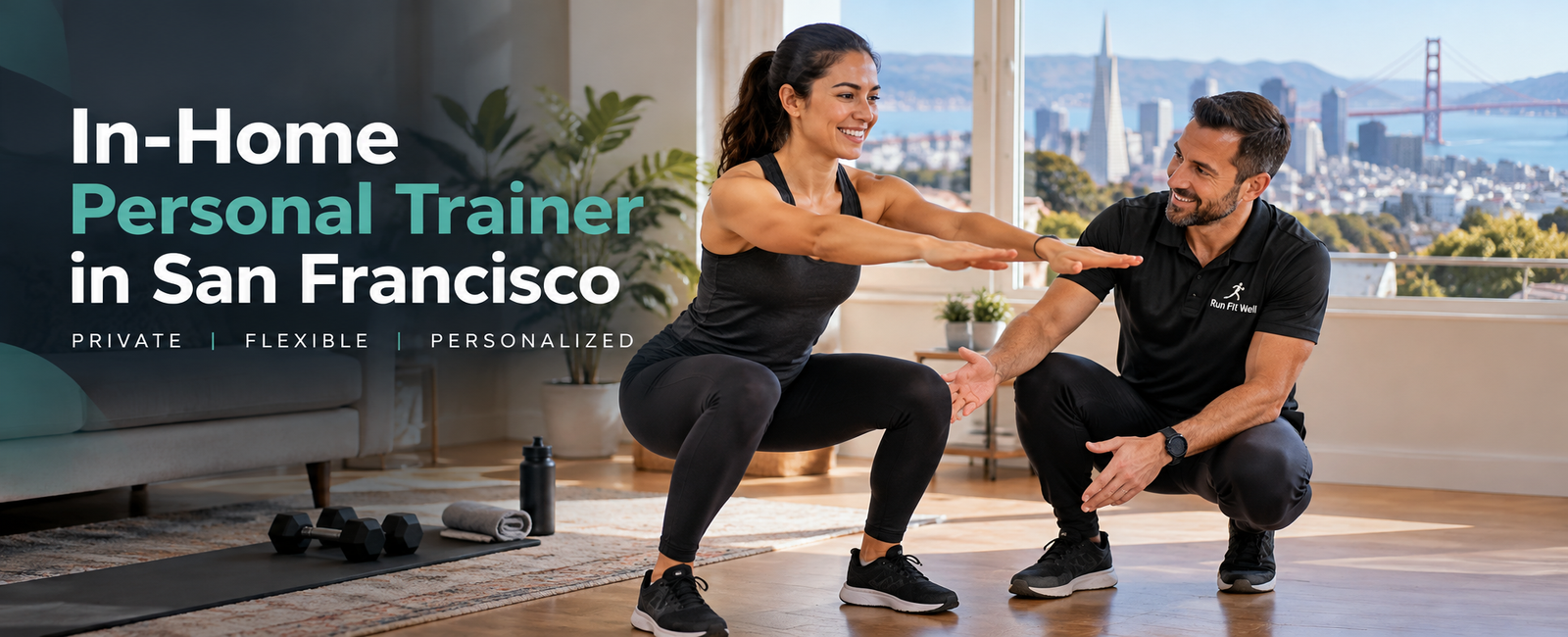
Instead of traveling to a gym, a trainer comes to your home or another suitable private location and builds workouts around your goals, fitness level, available space, and schedule. This can make personal training more convenient, private, and easier to fit into everyday life. At Run Fit Well, coach Edvandro Oliveira helps clients build personalized training programs designed around their current abilities, goals, movement needs, and lifestyle.
What Is In-Home Personal Training?
In-home personal training is one-on-one coaching delivered in your home or another agreed location. The trainer brings the workout structure to you, so you do not need to travel to a gym or follow a generic exercise routine on your own.
Depending on your goals, an in-home session may include strength training, mobility work, balance exercises, core training, bodyweight exercises, cardiovascular conditioning, flexibility work, and functional movement training. The program can be adjusted based on your available space, equipment, experience, and comfort level.
Why Choose an In-Home Personal Trainer in San Francisco?
San Francisco can be a busy place to live and work. Travel time, traffic, packed schedules, and limited availability can make regular gym visits difficult. Working with an in-home personal trainer in San Francisco removes much of that friction.
Instead of planning your day around the gym, the training session fits more naturally into your routine. For many clients, this makes it easier to stay consistent over time.
Benefits of In-Home Personal Training
More Convenience
Convenience is one of the biggest advantages of in-home training. You do not need to drive, commute, search for parking, wait for equipment, or spend extra time traveling before and after your workout. Your trainer comes to you, which can make regular exercise much easier to maintain.
This can be especially helpful for busy professionals, parents, older adults, people working from home, clients with limited transportation, and anyone with a tight schedule.
Greater Privacy
Some people feel uncomfortable exercising in a crowded gym. In-home personal training creates a more private environment where you can focus on the workout without worrying about other people watching or waiting for equipment.
This can be particularly helpful for beginners who are still learning basic movements and building confidence.
Personalized Workouts
An in-home personal training session is built around you. Your coach can adjust exercises based on your fitness level, movement ability, goals, and available equipment.
Your program may focus on building strength, improving mobility, increasing endurance, improving balance, supporting weight management, returning to exercise after a long break, or improving general fitness. The training can change as your fitness improves.
Better Accountability
Having a scheduled session with a trainer can make it easier to stay consistent. When someone is expecting you to train, it becomes harder to continually postpone workouts.
A personal trainer can also help track progress, adjust your program, and keep training realistic when your schedule changes.
Who Can Benefit From In-Home Personal Training?
In-home personal training can work for many different types of clients. It is not limited to athletes or highly experienced gym users. Beginners, busy professionals, older adults, and people returning to exercise can all benefit from personalized coaching at home.
Beginners
Beginners often benefit from one-on-one guidance because they can learn exercises in a controlled environment. A trainer can help explain how to perform movements, how much effort to use, how many repetitions to complete, when to rest, and how to progress safely.
This makes the process less confusing and more structured, especially for someone who has never followed a formal exercise program before.
Busy Professionals
San Francisco professionals often have unpredictable schedules and long workdays. In-home training can reduce the amount of time required for each workout by eliminating travel to and from the gym.
A 45- or 60-minute session can fit more easily into the day when no commute is required.
Older Adults
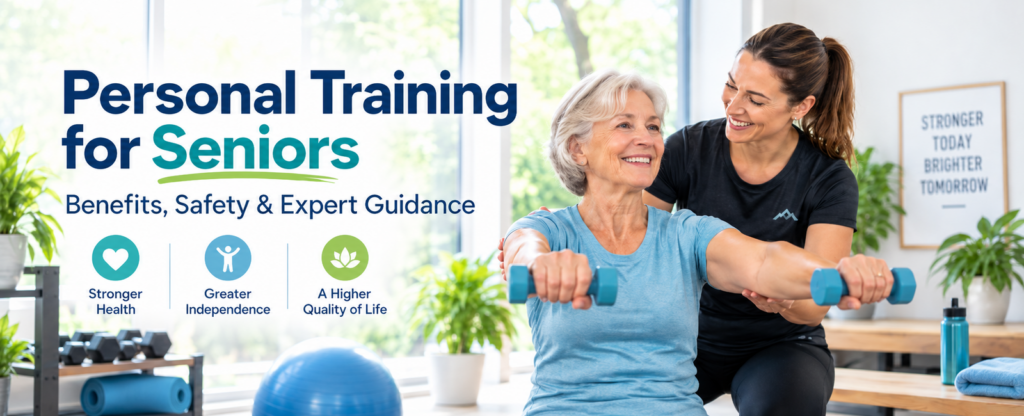
An in-home personal trainer for seniors can provide individualized support for strength, balance, mobility, and everyday movement. Training can be adapted to the client’s current ability and may focus on practical goals such as getting up from a chair more easily, improving balance, walking with greater confidence, maintaining strength, improving mobility, and staying active.
The intensity should always match the individual’s fitness level and comfort.
People Returning to Exercise
If you have not exercised consistently for months or years, jumping into a demanding fitness program may feel overwhelming. An in-home trainer can help you restart gradually with basic movement, mobility, light strength work, and manageable conditioning before progressing to more challenging exercises.
What Happens During the First In-Home Personal Training Session?
Your first session should not simply be a difficult workout. It is usually an opportunity for the trainer to understand your starting point and learn more about your goals, exercise history, current activity level, schedule, previous injuries or limitations, available equipment, and exercise preferences.
The trainer may also observe basic movements such as squatting, walking, reaching, balance, core control, and simple strength exercises. This information can help shape a more personalized training plan.
Do You Need Equipment for In-Home Personal Training?
Not necessarily. Many effective workouts can be performed using bodyweight exercises alone. A trainer may also use simple equipment such as resistance bands, dumbbells, kettlebells, exercise mats, stability tools, or small mobility equipment.
If you already have fitness equipment at home, your trainer can incorporate it into the program. You do not need a complete home gym to benefit from in-home personal training.
How Much Space Do You Need?
You usually need less space than you might expect. A small living room, spare room, garage, patio, or another clear area may be enough for many workouts.
The trainer can select exercises that match the space available. In some cases, sessions can also include outdoor training if there is a suitable nearby area.
In-Home Personal Training for Strength
Strength training is one of the most useful components of a well-rounded fitness program. At home, strength workouts may include squats, split squats, step-ups, glute bridges, push-ups, rows, shoulder presses, deadlift variations, and core exercises.
Exercises can be modified based on experience and equipment. The goal is to gradually increase your ability without making every session excessively difficult.
In-Home Personal Training for Mobility and Balance
Strength is important, but movement quality also matters. Mobility and balance exercises can be included to support everyday movement and general fitness.
This may include work for the hips, ankles, shoulders, spine, balance, and coordination. For older adults, mobility and balance work may be an especially important part of the program.
Can In-Home Personal Training Help With Weight Management?
Personal training can support a broader weight-management plan by helping you exercise consistently and build strength. A trainer can create workouts that combine strength training, cardiovascular exercise, general movement, and progressive training.
However, exercise is only one part of weight management. Nutrition, sleep, stress, daily activity, and long-term habits also matter. A good training program should support sustainable habits rather than rely on extreme workouts or unrealistic promises.
Is In-Home Training as Effective as Gym Training?
It can be. The effectiveness of a workout depends more on program quality, effort, consistency, and progression than on the location.
A gym provides access to a wider range of equipment, which can be useful for some training goals. However, many people can improve strength, fitness, mobility, and endurance using relatively simple equipment at home. For clients who are more consistent when training at home, in-home personal training may actually be the more practical option.
In-Home Personal Trainer vs. Gym Personal Trainer
Both options can work. A gym personal trainer may be a good choice if you enjoy the gym environment, want access to extensive equipment, or prefer training outside the home.
An in-home personal trainer may be a better fit if you want greater privacy, need schedule flexibility, want to avoid commuting, prefer one-on-one attention at home, or feel uncomfortable in crowded gyms. The best option depends on your lifestyle and preferences.
How Often Should You Work With a Personal Trainer?
There is no single schedule that works for everyone. Some clients work with a trainer once per week, while others train two or three times per week.
The right frequency depends on your goals, experience, budget, schedule, and ability to exercise independently. For example, you might train with your coach twice per week and complete one additional workout on your own. As you become more confident, the structure can change.
What Should You Look for in an In-Home Personal Trainer?
Before choosing a trainer, consider whether they take time to understand your needs. A good trainer should ask about your goals, understand your exercise history, adjust workouts to your fitness level, explain exercises clearly, monitor your technique, progress training gradually, and include recovery when needed.
The training should feel personalized rather than like the same routine is being given to every client.
In-Home Personal Training With Run Fit Well
At Run Fit Well, personal training is built around the individual. Coach Edvandro Oliveira works with clients to create practical fitness programs based on their current ability, goals, schedule, and lifestyle.
Depending on your needs, sessions may include strength training, mobility, balance work, core exercises, conditioning, functional movement, and general fitness training. The goal is to make training structured, realistic, and sustainable.
Whether you are a beginner, an older adult, a busy professional, or simply prefer to exercise privately, in-home coaching can provide a more convenient way to stay consistent.
Final Thoughts
Working with an in-home personal trainer in San Francisco can make exercise easier to fit into a busy lifestyle. You get personalized coaching without needing to travel to a gym, and your workouts can be adapted to your experience, available space, equipment, and goals.
For some people, the biggest benefit is convenience. For others, it is privacy, accountability, or the confidence that comes from having direct guidance. The most effective training environment is the one you can use consistently.
If training at home removes barriers and helps you follow a structured program, it can be a practical way to build strength, improve mobility, increase fitness, and stay active over the long term.
Frequently Asked Questions
What does an in-home personal trainer do?
An in-home personal trainer comes to your home or another agreed location and provides personalized workouts based on your fitness level, goals, available space, and equipment.
Do I need gym equipment at home?
No. Many workouts can be performed using bodyweight exercises, resistance bands, dumbbells, or other simple equipment.
Is in-home personal training good for beginners?
Yes. Beginners can benefit from one-on-one instruction, exercise demonstrations, technique guidance, and a program that progresses gradually.
Can seniors work with an in-home personal trainer?
Yes. In-home personal training for seniors can be adapted to focus on strength, mobility, balance, and everyday movement based on the individual’s abilities.
How much space is needed for an in-home workout?
A large home gym is usually not necessary. Many workouts can be performed in a small clear area such as a living room, garage, spare room, or patio.
How many times per week should I work with a trainer?
It depends on your goals, experience, schedule, and ability to train independently. Some clients work with a trainer once per week, while others prefer two or more sessions.
Does Run Fit Well provide personalized personal training?
Yes. Run Fit Well provides personalized personal training, and Edvandro Oliveira can structure sessions around your fitness level, schedule, goals, and movement needs.