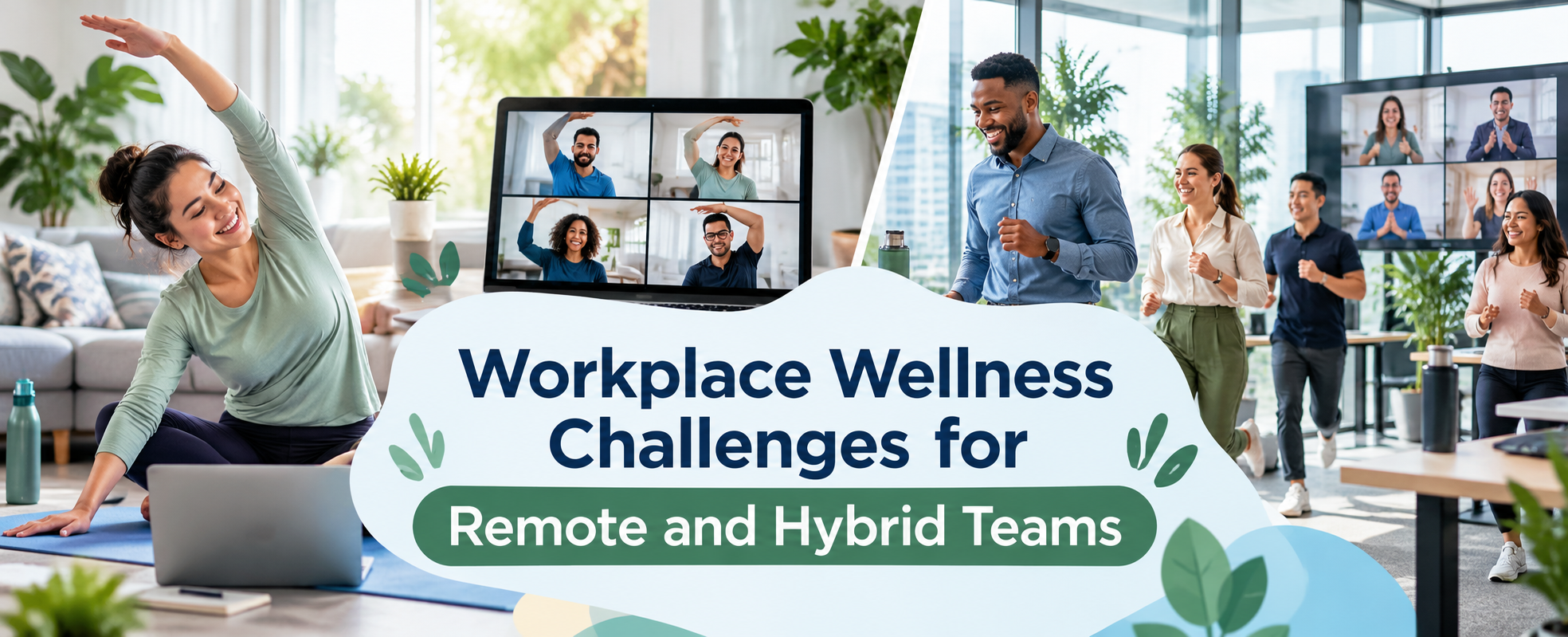
Remote and hybrid work have changed how employees communicate, collaborate, and manage their daily routines. While flexible work arrangements can offer greater convenience, they also create new challenges for organizations trying to keep employees connected and engaged in workplace wellness.
Employees working from home may have different schedules, limited access to fitness facilities, or fewer opportunities to participate in activities with colleagues. Hybrid teams face an additional challenge: creating inclusive wellness experiences for people who work from different locations.
This is where workplace wellness challenges for remote teams can help.
Instead of requiring employees to visit a physical office or complete identical fitness activities, workplace wellness challenges provide flexible ways to encourage movement, develop healthy routines, and create shared experiences.
From virtual walking challenges to online mobility sessions and team participation goals, organizations can design activities around how employees actually work.
In this guide, we’ll explore practical workplace wellness challenges for remote and hybrid teams, implementation strategies, participation tools, and methods for building inclusive programs that employees can realistically enjoy.
What Are Workplace Wellness Challenges for Remote and Hybrid Teams?
Workplace wellness challenges are structured, voluntary initiatives that encourage employees to participate in activities supporting physical health, healthy habits, or overall wellbeing.
For remote and hybrid teams, these activities are designed to work across different locations, schedules, and working arrangements.
Unlike traditional office-based wellness initiatives, remote challenges do not require every employee to gather in the same location.
Employees may participate from home, a local park, a suitable fitness space, or their workplace.
Common examples include:
- Virtual walking and movement challenges
- Online yoga and mobility sessions
- Flexible team fitness activities
- Daily movement-break challenges
- Remote running and walking clubs
- Wellness education challenges
- Individual activity goals
- Hybrid team participation campaigns
The goal of workplace wellness challenges is to create accessible opportunities for movement while helping employees feel included regardless of where they work.
Organizations exploring structured team activities can learn more about Corporate Fitness Challenges at Run Fit Well.
Why Are Wellness Challenges Important for Remote Employees?
Remote working arrangements can make traditional workplace wellness programs more difficult to organize. Workplace wellness challenges offer a flexible alternative.
Employees may work from different cities, have changing office attendance schedules, or need flexibility around meetings and personal responsibilities.
A successful remote employee wellness challenge should address these practical barriers rather than create additional obligations.
Encourage Movement Throughout the Workday
Employees working from home may spend extended periods at computers.
Workplace wellness challenges can remind participants to incorporate suitable movement into their routines.
For example, an employee might take a short walking break between meetings or participate in an optional online mobility session.
The objective is to create realistic opportunities for activity, not require employees to exercise continuously throughout the day.
Create Opportunities for Team Connection
Distributed employees may have fewer informal interactions with colleagues.
Shared workplace wellness challenges can create opportunities for communication outside regular work responsibilities.
A team walking challenge, virtual fitness session, or shared activity goal can provide a common experience without requiring everyone to be physically present.
Support Different Working Schedules
Not every employee can attend a live fitness class at the same time.
Asynchronous workplace wellness challenges allow employees to participate when their schedules permit.
This is especially helpful for organizations whose teams work across different time zones.
Make Participation More Inclusive
Remote-friendly activities can provide options for employees with different fitness backgrounds, mobility needs, schedules, and preferences.
Inclusive workplace wellness challenges allow participants to choose suitable activities instead of expecting everyone to reach the same physical performance target.
10 Workplace Wellness Challenge Ideas for Remote and Hybrid Teams
These workplace wellness challenges can be adapted for small teams, growing companies, and distributed organizations.
1. Virtual Walking Challenge
Among workplace wellness challenges, a virtual walking activity encourages employees to incorporate walking into their daily routines.
Participants can choose a comfortable walking goal based on their abilities and preferences.
Rather than ranking employees solely by step totals, organizations can recognize consistent participation.
How to organize it:
- Establish a two- or four-week challenge period.
- Allow employees to set suitable personal goals.
- Offer alternative activities for employees who cannot participate through walking.
- Share optional weekly participation updates.
- Collect feedback at the end.
This format allows employees to participate from home, during breaks, or at suitable outdoor locations.
2. Daily Movement Break Challenge
Remote employees may benefit from reminders to move between extended periods of work.
This type of workplace wellness challenge encourages employees to take short, comfortable activity breaks when appropriate.
Examples include walking around the home, stretching, standing up, or performing suitable seated movements.
Challenge idea: Encourage participants to choose one or two convenient movement breaks during their working day.
Employees should be free to adapt the activity to their circumstances.
3. Virtual Yoga and Mobility Challenge
Yoga and mobility workplace wellness challenges can provide structured movement opportunities for distributed teams.
Organizations may offer live virtual sessions, optional guided movement activities, or a combination of formats.
Potential activities include:
- Beginner-friendly yoga
- Gentle stretching
- Shoulder and upper-back mobility
- Guided movement breaks
- Comfortable post-work movement routines
Programs should provide suitable modifications and remind employees to work within their comfort levels.
Explore Corporate Yoga & Mobility Programs for workplace-friendly movement options.
4. Team Activity Participation Challenge
Team-based workplace wellness challenges encourage collaboration without requiring employees to compete on physical performance.
Employees can contribute by completing an appropriate activity of their choice.
For example, participants might earn one participation credit for a suitable movement session, regardless of the number of steps completed or calories burned.
Teams can work toward shared participation milestones.
Why it works for hybrid teams: Employees working from the office and those working remotely can contribute without needing identical equipment or locations.
5. Remote Running and Walk-Run Challenge
Employees interested in walking or running can participate in a flexible challenge that supports their individual experience levels.
Beginners may select walk-run activities, while experienced runners can follow appropriate training routines.
These workplace wellness challenges can focus on consistency rather than total distance.
Companies considering structured employee running activities can explore Corporate Running Programs.
6. Weekly Fitness Activity Challenge
Instead of repeating the same activity every day, organizations can introduce a different wellness theme each week.
For example:
- Week 1: Walking and everyday movement
- Week 2: Mobility and stretching
- Week 3: Beginner-friendly strength activities
- Week 4: Personal activity choice and reflection
Employees can participate through suitable activities that match each week’s theme.
This approach provides variety while keeping workplace wellness challenges easy to understand.
7. Virtual Wellness Workshop Challenge
Some employees prefer learning about wellness rather than participating in group workouts.
Organizations can introduce educational workplace wellness challenges involving short workshops and practical activities.
Topics might include:
- Building a realistic exercise routine
- Moving more during remote work
- Understanding recovery and rest
- Beginning a walking or running program
- Developing sustainable movement habits
Participants could attend an optional workshop and choose one practical idea to try during the week.
Learn more about Employee Wellness Workshops.
8. Hybrid Office and Home Movement Challenge
Hybrid workplace wellness challenges combine onsite group activities with flexible remote participation.
For example, office employees might join a guided workplace fitness session while remote colleagues participate in a suitable virtual activity or complete an individual movement goal.
Participation recognition should be comparable across both formats.
This helps prevent remote employees from feeling excluded from office-based initiatives.
9. Personal Wellness Consistency Challenge
Employees choose an appropriate movement goal and work toward it over a defined period.
Examples might include taking regular walking breaks, attending a weekly mobility session, or incorporating suitable physical activity into their routine.
Participants focus on their own consistency rather than comparing themselves with coworkers.
These workplace wellness challenges can work well for employees who prefer private, independent participation.
10. Virtual Team Wellness Day
A virtual wellness day is one format for workplace wellness challenges and provides an opportunity for distributed employees to participate in shared activities.
Possible options include:
- A short online mobility session
- An interactive wellness workshop
- An optional group fitness session
- A guided movement break
- A team discussion about sustainable healthy habits
For teams working across time zones, organizations can provide multiple session times or a suitable asynchronous alternative.
Synchronous vs. Asynchronous Wellness Challenges: Which Works Better?
One of the most important decisions when planning workplace wellness challenges is whether employees need to participate at the same time.
Synchronous Wellness Activities
Synchronous activities happen at a scheduled time.
Examples include live virtual fitness classes, online mobility sessions, and interactive workshops.
They can create opportunities for real-time interaction and shared participation.
However, employees in different time zones or with conflicting responsibilities may find it difficult to attend.
Asynchronous Wellness Activities
Asynchronous activities can be completed at a time that works for each employee.
Examples include individual walking goals, flexible movement challenges, and recorded educational activities.
These formats provide greater scheduling flexibility but may create fewer opportunities for real-time team interaction.
The Best Approach: Combine Both Formats
For many remote and hybrid workplaces, combining synchronous and asynchronous activities can provide a useful balance.
A company might offer one optional live session each week while allowing employees to complete other activities independently.
This creates opportunities for team connection without making scheduling a major barrier.
How to Organize a Remote Workplace Wellness Challenge
Successful workplace wellness challenges require clear planning, even when employees participate from different locations.
Step 1: Understand Your Team’s Working Arrangements
Start by reviewing employee locations, time zones, working hours, and participation preferences.
Consider whether employees have suitable activity spaces or require alternatives to traditional workouts.
A short voluntary survey can help identify common needs.
Step 2: Define Your Challenge Goals
Decide what your organization wants its workplace wellness challenges to accomplish.
Possible goals include:
- Encourage regular movement opportunities.
- Improve access to voluntary wellness activities.
- Support participation across remote and office-based employees.
- Introduce beginner-friendly fitness activities.
- Create opportunities for team connection.
Set measurable objectives without making promises about productivity or health outcomes.
Step 3: Choose Accessible Activities
Choose workplace wellness challenges that employees can participate in without needing expensive equipment or specialized facilities.
Offer modifications and alternatives where appropriate.
Employees should not be required to disclose private health information to join the program.
Step 4: Select a Suitable Duration
Workplace wellness challenges can run for one week, two weeks, 30 days, or another period based on company goals.
A shorter pilot may be useful for organizations launching their first initiative.
For a general day-by-day workplace activity schedule, our 30-Day Corporate Fitness Challenge Ideas for Employees guide provides an adaptable starting point.
Step 5: Create a Communication Plan
Explain your workplace wellness challenges clearly before launch.
Employees should understand:
- The purpose of the program
- Available activity options
- Participation guidelines
- Challenge dates
- How to join
- Whether activities are live or flexible
- How feedback will be collected
Use communication channels employees already access, while avoiding excessive reminders.
Step 6: Establish a Simple Participation System
A shared form, employee portal, or suitable wellness platform may help track voluntary participation.
For smaller teams, a basic weekly check-in can be sufficient.
Collect only the information needed to coordinate and evaluate workplace wellness challenges.
Step 7: Launch and Review
Begin with clear instructions and provide assistance if employees have questions.
During the challenge, monitor aggregate participation and employee feedback.
After completion, review what worked and identify ways to improve future initiatives.
Sample Four-Week Wellness Challenge for Remote Teams
The following example shows how workplace wellness challenges can fit a flexible four-week campaign.
Week 1: Introduce Movement and Participation
Focus: Help employees understand the program and choose suitable activities.
Suggested activities:
- Voluntary wellness orientation
- Personal movement goal setting
- Flexible walking or movement breaks
- Optional virtual mobility session
- Short employee feedback check-in
Week 2: Build Flexible Wellness Habits
Focus: Encourage consistency without requiring employees to attend every session.
Suggested activities:
- Individual movement goals
- Optional online fitness session
- Team participation check-in
- Short movement-break challenge
- Rest and recovery options
Week 3: Strengthen Team Connection
Focus: Provide opportunities for interaction between remote and office-based colleagues.
Suggested activities:
- Virtual team fitness activity
- Shared participation milestone
- Optional walking or running group
- Guided workplace mobility session
- Team wellness discussion
Week 4: Evaluate and Plan Ahead
Focus: Identify activities employees found useful.
Suggested activities:
- Employee choice activity
- Optional closing group session
- Personal goal reflection
- Anonymous feedback survey
- Recognition of voluntary participation
This schedule is illustrative and should be adapted to employee needs and available resources.
How to Keep Remote Employees Engaged in Wellness Challenges
Maintaining participation in workplace wellness challenges can be difficult when employees are geographically distributed.
A few practical strategies can help.
Offer Flexible Participation Windows
Avoid scheduling every activity at one fixed time.
Where possible, provide multiple session options or activities employees can complete independently.
Keep Activities Simple
Employees should not need complicated equipment, extensive preparation, or long training sessions to participate.
Simple movement opportunities can make the challenge easier to incorporate into a workday.
Avoid Excessive Competition
Ranking participants only by steps, exercise duration, or physical performance may discourage some employees.
Recognition can instead focus on consistency, participation, and collaborative goals.
Encourage Leadership Participation Without Pressure
Managers can help normalize movement breaks and voluntary wellness activities.
However, employees should not feel that participation affects their job performance evaluations.
Include Employees Who Cannot Attend Live Sessions
Hybrid and remote teams may have different scheduling constraints.
Provide reasonable alternatives so employees working outside the office have opportunities to participate.
Collect Feedback Throughout the Program
Short surveys can reveal scheduling problems, unclear instructions, or activities that employees find inaccessible.
Use feedback to make adjustments rather than waiting until the program ends.
Tools and Technology for Managing Virtual Wellness Challenges
Technology can make workplace wellness challenges easier to organize, but a sophisticated platform is not always necessary.
Video Conferencing Tools
Online meeting platforms can support live fitness sessions, mobility activities, and wellness workshops.
Shared Activity Trackers
Voluntary digital forms or simple participation trackers can help employees record completed activities.
Avoid requiring detailed personal fitness or health data.
Team Communication Platforms
Company communication channels can be used to share reminders, session details, encouragement, and program updates.
Digital Scheduling Tools
Calendar invitations can help employees plan participation around work responsibilities.
For distributed teams, clearly identify time zones and provide flexible alternatives.
Optional Fitness Applications
Employees may already use activity-tracking applications.
Organizations should not assume all employees own wearable devices or are comfortable sharing activity data.
Provide device-free options and respect employee privacy.
Measuring the Success of Remote and Hybrid Wellness Challenges
Evaluating workplace wellness challenges helps employers understand whether employees could access and benefit from the initiative.
Participation Rate
Measure the proportion of eligible employees who voluntarily participate.
Participation Rate = (Number of Participating Employees / Number of Eligible Employees) × 100
This shows program reach but does not independently establish improved health.
Remote vs. Onsite Participation
Review aggregate participation across different working arrangements.
If remote employees participate less frequently, investigate possible scheduling, communication, or accessibility barriers.
Avoid singling out individual employees.
Live Session Attendance
Track attendance at optional virtual events and workshops.
Compare session times and formats to identify practical scheduling improvements.
Continued Participation
Review whether employees remain involved over several weeks.
Declining participation may suggest that activities need to be more flexible or relevant.
Employee Satisfaction
Use anonymous feedback to understand whether the program was accessible, enjoyable, and convenient.
Interest in Future Programs
Ask whether employees would like recurring sessions, future challenges, or additional wellness education.
Organizations should avoid claiming that challenge participation alone proves improvements in productivity, retention, or employee health.
Common Mistakes to Avoid With Remote Wellness Challenges
Expecting Everyone to Participate at the Same Time
Employees in different locations may have incompatible schedules.
Offer asynchronous activities or alternative session times.
Making Activity Tracking Mandatory
Not everyone uses wearable devices or wants to share personal movement data.
Use voluntary reporting and accessible alternatives.
Favoring Office-Based Employees
Hybrid programs should not automatically provide better activities or recognition to employees who visit the office.
Consider how remote participants can access similar opportunities.
Using One Fitness Standard for Everyone
Employees have different abilities, experience levels, and circumstances.
Encourage suitable individual goals rather than identical performance requirements.
Ignoring Privacy
Avoid collecting unnecessary health information, personal body measurements, or medical histories.
Use privacy-conscious participation systems.
Overloading Employees With Wellness Tasks
Workplace wellness challenges should not become another source of pressure.
Keep activities realistic, optional, and appropriate for working schedules.
Remote and Hybrid Corporate Wellness in San Francisco and the Bay Area
Many workplaces across San Francisco and the surrounding Bay Area combine office-based work with flexible schedules and distributed employees.
Remote-friendly workplace wellness challenges can help organizations provide consistent participation opportunities across different locations.
Run Fit Well offers Corporate Wellness services for organizations in:
For example, a San Francisco company might combine onsite group fitness with optional virtual mobility sessions.
A Palo Alto organization with distributed employees may prefer flexible movement challenges complemented by occasional live workshops.
The right approach should depend on actual employee needs and workplace arrangements rather than assumptions based on location.
How Run Fit Well Supports Remote and Hybrid Workplace Wellness
Run Fit Well helps organizations explore movement-focused corporate wellness programs designed around team size, employee experience, schedules, and delivery preferences.
Led by coach Edvandro Oliveira, Run Fit Well offers services including:
- Corporate fitness challenges
- Workplace fitness sessions
- Corporate running programs
- Corporate yoga and mobility
- Employee wellness workshops
- Corporate wellness events
Depending on the selected service and workplace requirements, organizations can discuss onsite, outdoor, virtual, or hybrid formats.
The objective is to build practical workplace wellness challenges that work with the team’s environment rather than forcing employees into one rigid participation model.
Build a Wellness Challenge That Works Wherever Your Team Works
Effective workplace wellness challenges for remote teams are built around flexibility, accessibility, and meaningful participation.
Instead of expecting employees to follow identical schedules or complete the same workouts, organizations can create opportunities that accommodate different working arrangements and fitness experiences.
Virtual movement activities, team participation goals, guided mobility sessions, and flexible challenges can help employees take part regardless of their physical location.
Start with manageable workplace wellness challenges, gather feedback, and adapt future activities based on what your employees find useful.
Ready to explore a wellness challenge for your distributed workforce?
Explore Corporate Fitness Challenges at Run Fit Well or contact the team to discuss a suitable approach for your organization.
Frequently Asked Questions
What are workplace wellness challenges for remote teams?
They are voluntary wellness initiatives designed for employees working from different locations. Activities may include virtual fitness sessions, flexible walking challenges, mobility exercises, and team participation goals.
What are some good virtual wellness challenge ideas?
Popular options include virtual walking challenges, movement-break campaigns, online mobility sessions, remote running groups, and flexible team activity challenges.
How do you organize a wellness challenge for hybrid employees?
Start by understanding employee schedules and locations. Choose accessible activities, offer live and asynchronous participation options, communicate clear guidelines, and evaluate feedback after the program.
Can remote employees participate without fitness trackers?
Yes. Employees can use voluntary activity check-ins, simple participation forms, or other accessible tracking methods. Wearable devices should not be required.
How long should a remote wellness challenge last?
A company can begin with a one-week or two-week pilot and expand if employees find it useful. Four-week or 30-day programs are also common planning options, but no fixed duration works for every organization.
How can companies improve participation in virtual wellness challenges?
Offer flexible schedules, different activity choices, inclusive participation rules, clear communication, and opportunities for feedback. Keep participation voluntary.
Are virtual wellness challenges suitable for small businesses?
Yes. Small teams can organize simple walking challenges, online mobility sessions, or shared movement activities without expensive equipment or specialized software.
How do you measure the success of a remote workplace wellness program?
Employers can review aggregate participation, attendance, employee satisfaction, accessibility, continued involvement, and feedback from remote and office-based participants.