Employee wellbeing is more than an attractive workplace benefit. For organizations managing busy schedules, demanding responsibilities, and changing work environments, helping employees maintain healthier routines is an important part of creating a supportive workplace.
This is where corporate wellness programs come in.
Corporate wellness programs help organizations introduce structured initiatives that support employee health, encourage physical activity, and make workplace wellbeing a more practical part of everyday life.
However, offering a fitness class or organizing an occasional wellness event is not necessarily the same as building an effective long-term program.
A successful initiative begins with understanding employee needs, defining realistic goals, selecting suitable activities, and evaluating results.
In this guide, we’ll explain what corporate wellness programs are, why businesses introduce them, their potential benefits, essential components, and how employers can develop an approach that supports their teams.
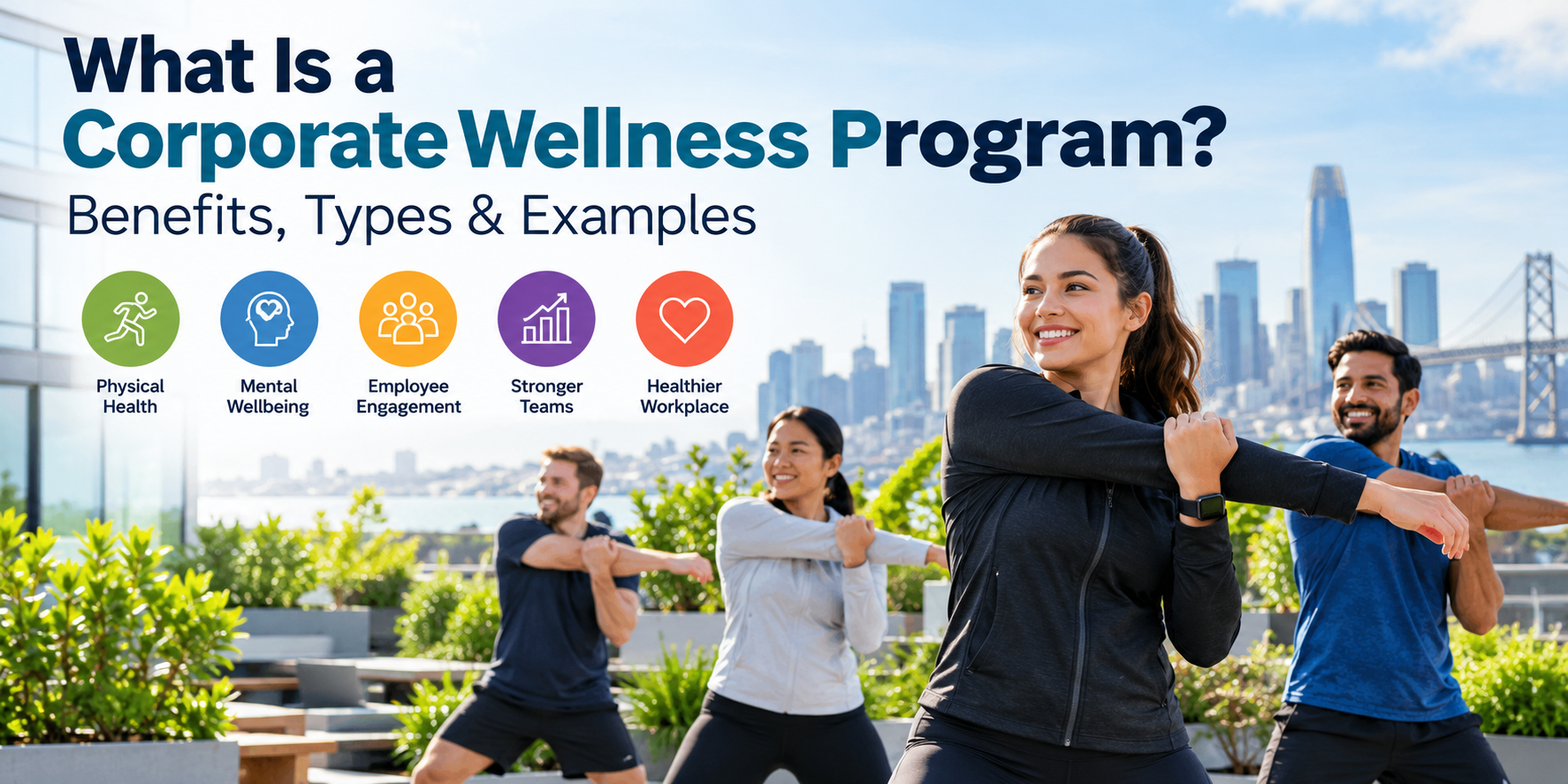
What Is a Corporate Wellness Program?
A corporate wellness program is an employer-supported initiative designed to improve or support employees’ physical health, mental wellbeing, and overall workplace experience through organized activities, education, resources, and supportive policies.
These initiatives can include workplace fitness, mobility sessions, health education, movement challenges, and other opportunities that encourage healthier habits.
Some businesses introduce wellness programs through recurring sessions, while others begin with pilot programs or periodic employee activities.
Corporate wellness is not limited to physical exercise. A comprehensive workplace wellbeing strategy also considers organizational practices, employee safety, accessibility, and the working environment.
The Centers for Disease Control and Prevention (CDC) describes effective workplace health initiatives as coordinated, systematic, and comprehensive efforts that address worker health and safety.
For businesses exploring movement-focused initiatives, Run Fit Well’s Corporate Wellness Programs provide options designed around workplace fitness, employee participation, and practical movement activities.
Why Do Companies Need Corporate Wellness Programs?
Workplace routines can make it difficult for employees to maintain consistent health and fitness habits.
Employees working in office environments may spend long periods sitting at desks, while hybrid and remote workers may find it challenging to establish movement breaks throughout the day.
Other employees may have physically demanding roles, changing schedules, or limited opportunities to participate in traditional fitness programs.
These differences highlight why workplace wellness should not follow a one-size-fits-all approach.
Well-planned employee wellness programs can help organizations make appropriate activities more accessible while supporting a workplace culture that recognizes employee wellbeing.
The World Health Organization (WHO) recommends that adults regularly engage in physical activity and limit sedentary behavior to support long-term health.
Workplace wellness initiatives can provide opportunities to incorporate movement into employees’ routines, although workplace sessions alone do not necessarily meet all individual health and activity needs.
The goal is to create sustainable opportunities that employees can realistically use.
6 Potential Benefits of Corporate Wellness Programs
Corporate wellness programs can support employees and organizations in several ways. Their effectiveness depends on program design, workplace conditions, employee participation, and long-term implementation.
1. Encourage Healthier Daily Habits
One of the primary benefits of corporate wellness programs is making healthier routines easier to practice.
Many employees understand the importance of exercise but struggle to fit regular activity into demanding schedules.
Workplace movement opportunities can reduce some of these practical barriers.
For example, a company might introduce regular fitness sessions, guided movement breaks, or voluntary walking activities.
Starting with manageable activities can encourage employees to build consistency rather than pursue unrealistic short-term goals.
2. Support Physical Health and Wellbeing
Regular physical activity is associated with important physical and mental health benefits.
Appropriately designed workplace fitness initiatives can help employees access structured movement opportunities and learn exercise habits suitable for their experience.
Programs should account for different abilities, existing health considerations, and individual comfort levels.
Wellness activities can support healthy routines, but employers should avoid presenting them as treatments or guaranteed ways to prevent medical conditions.
3. Create Opportunities for Employee Engagement
Employees may be more interested in workplace wellbeing initiatives when activities are relevant, enjoyable, and convenient.
Participation in group activities can create opportunities for interaction beyond normal professional responsibilities.
However, employers should not assume that every employee enjoys competitive fitness challenges or group workouts.
Offering choices and collecting feedback can help programs appeal to a wider workforce.
4. Support Workplace Relationships
Shared activities can bring employees from different teams and departments together.
Whether participating in a walking group, attending a movement workshop, or preparing for a company fitness event, employees may develop connections outside their usual responsibilities.
These opportunities can complement existing team-building efforts.
5. Encourage a Supportive Workplace Culture
An effective wellness initiative can demonstrate an organization’s commitment to employee health.
However, workplace wellbeing cannot be achieved through fitness activities alone.
Reasonable workloads, adequate breaks, workplace safety, management support, and respect for employee privacy remain essential.
Corporate wellness should support these organizational practices rather than replace them.
6. Provide a Structured Approach to Employee Wellbeing
Without a clear plan, employee wellness activities may become inconsistent or difficult to evaluate.
A structured program helps businesses define goals, organize resources, communicate opportunities, and assess employee feedback.
This approach can make wellness initiatives more manageable and adaptable over time.
What Are the Essential Components of an Effective Corporate Wellness Program?
A successful program involves more than choosing activities.
The following components help organizations build initiatives that are practical, inclusive, and aligned with their workplace needs.
1. Employee Needs Assessment
Before launching a wellness initiative, employers should understand what their employees need.
This can involve voluntary surveys, anonymous feedback, discussions about scheduling, and accessibility considerations.
Questions may include:
- What types of wellness activities interest employees?
- What barriers prevent participation?
- Would employees prefer onsite, outdoor, or virtual sessions?
- Which schedules would be convenient?
- What accommodations may be necessary?
Employee feedback provides a stronger foundation than simply choosing activities based on management preferences.
Organizations should avoid requesting unnecessary personal medical information.
2. Clear Program Goals
Every corporate wellness initiative should have a defined purpose.
For example, a company may want to:
- Make physical activity more accessible during the workweek
- Encourage voluntary participation in movement sessions
- Introduce health and fitness education
- Provide opportunities for team connection
- Establish consistent employee wellbeing activities
Goals should be realistic, measurable, and connected to the organization’s priorities.
Instead of promising improvements in productivity or reduced healthcare expenses, organizations can begin by measuring participation and employee satisfaction.
3. Inclusive Program Design
Employees have different ages, fitness backgrounds, physical abilities, and personal preferences.
An inclusive wellness program should provide appropriate alternatives and avoid making participation feel mandatory.
For example, a company organizing a movement challenge could provide different activity options rather than requiring every participant to complete the same running distance.
Accessibility and realistic participation expectations can help more employees feel comfortable joining.
4. Suitable Wellness Activities
Activities should be selected based on employee preferences, workplace conditions, and program goals.
Examples of movement-focused program components include:
- Workplace Fitness: Structured group exercise and movement sessions that can be adapted to available spaces and participant experience. Explore Workplace Fitness Programs.
- Corporate Fitness Challenges: Voluntary team activities designed to encourage movement and participation over a defined period. Learn about Corporate Fitness Challenges.
- Corporate Running Programs: Group running and walk-run activities for employees with different experience levels. Explore Corporate Running Programs.
- Corporate Yoga & Mobility: Guided movement sessions focused on stretching, mobility, and accessible workplace activity. Discover Corporate Yoga & Mobility Programs.
- Employee Wellness Workshops: Practical educational sessions that help employees understand movement, exercise habits, and related wellbeing topics. Explore Employee Wellness Workshops.
- Corporate Wellness Events: Organized activities that introduce employees to wellbeing initiatives or bring teams together. Explore Corporate Wellness Events.
For additional activity inspiration, read Best Corporate Wellness Program Ideas for San Francisco Companies.
5. Management Support and Communication
Employees need clear information about what a wellness program includes and how they can participate.
Organizations should communicate:
- What activities are available
- When sessions take place
- Whether participation is voluntary
- What equipment or preparation is necessary
- Who employees can contact with questions
- How feedback will be collected
Managers can encourage participation by helping employees access suitable opportunities during their schedules.
However, employees should not be pressured to join or disclose personal health information.
6. Program Evaluation and Improvement
An effective wellness program evolves as employees’ needs and organizational priorities change.
Employers should review feedback, identify participation barriers, and adjust activities when necessary.
Evaluation helps determine whether the initiative is practical and valuable for the intended workforce.
How to Build a Corporate Wellness Program: A Step-by-Step Framework
Companies do not need to introduce a large collection of services immediately.
A structured implementation process can make workplace wellbeing programs easier to manage.
Step 1: Identify the Workplace’s Main Challenges
Start by understanding employee schedules, working environments, and common barriers to participation.
For example, a desk-based team may be interested in movement breaks, while employees with hybrid schedules may prefer flexible activity formats.
Avoid assuming every team has the same needs.
Step 2: Choose One or Two Clear Objectives
Define what the first phase of the program should achieve.
A company might focus on increasing participation in voluntary movement activities or introducing accessible wellbeing education.
Starting with a small number of objectives makes progress easier to evaluate.
Step 3: Select Appropriate Activities
Choose activities that support those objectives.
Consider:
- Employee experience levels
- Available indoor or outdoor space
- Work schedules
- Program delivery options
- Accessibility
- Resources and budget
For example, a small office may begin with a weekly mobility session, while a larger organization may offer several program formats.
Step 4: Establish a Pilot Program
A pilot allows the organization to test activities before committing to a long-term initiative.
Consider an illustrative four-week program:
- Week 1: Introduce the program and gather initial participation feedback.
- Week 2: Offer a guided movement or workplace fitness session.
- Week 3: Continue the activity and provide a short educational component.
- Week 4: Review participation, collect employee feedback, and identify possible improvements.
This is a sample planning framework, not a fixed schedule that every company must follow.
Step 5: Review Participation and Employee Feedback
At the end of the pilot, assess whether the initiative met its original goals.
Questions could include:
- Did employees understand the program?
- Were activities accessible?
- Were the times convenient?
- What prevented some employees from participating?
- Would employees like the program to continue?
Use aggregate feedback rather than unnecessary personal health information.
Step 6: Improve and Expand the Program
Based on the results, a company can adjust session frequency, activity types, communication, or scheduling.
If the pilot receives positive feedback, the organization may consider recurring fitness sessions or additional wellness activities.
The objective is continuous improvement, not simply increasing the number of activities.
How Do You Measure the Success of a Corporate Wellness Program?
Measurement is an important part of long-term program planning.
However, organizations should distinguish between participation measures and actual health or business outcomes.
Employee Participation Rate
Track how many eligible employees voluntarily participate.
For example, if 30 out of 100 eligible employees join a wellness activity, the participation rate is 30%.
This provides a useful starting measure but does not independently demonstrate improvements in health.
Session Attendance
Review attendance across activities to identify which formats employees find useful.
A company may discover that shorter sessions attract more participants than longer classes.
Employee Satisfaction
Collect anonymous feedback about session quality, accessibility, convenience, and overall experience.
Employee satisfaction can help guide future programming.
Engagement Over Time
Measure whether employees continue attending activities or whether participation decreases.
Consistent participation may suggest that activities are convenient and relevant, although additional feedback is needed to understand why.
Progress Toward Defined Goals
Compare outcomes with the objectives set before launch.
For example, if the goal was to introduce accessible weekly movement opportunities, evaluate whether sessions were delivered consistently and employees could reasonably attend.
Broader outcomes such as productivity, absenteeism, or healthcare expenses require more careful evaluation and cannot automatically be attributed to a wellness program.
The CDC’s Workplace Health Model supports coordinated, systematic, and comprehensive approaches to employee health initiatives.
Common Mistakes Companies Should Avoid
Businesses can improve their wellness initiatives by recognizing several common planning mistakes.
Introducing Activities Without Employee Feedback
Programs designed without employee input may not reflect actual interests or working schedules.
A short needs assessment can help identify suitable starting points.
Treating Wellness as a One-Time Event
An individual event can introduce employees to workplace wellness, but sustained initiatives generally require continued engagement and appropriate follow-up.
Focusing Only on Participation Numbers
High attendance does not necessarily mean a program is meeting employee needs.
Organizations should also consider satisfaction, accessibility, and feedback.
Ignoring Individual Differences
Employees have different health backgrounds, fitness experiences, physical abilities, and preferences.
Activities should include suitable modifications and participation alternatives.
Expecting Immediate Business Results
Corporate wellness initiatives are not guaranteed to improve productivity, retention, or healthcare costs within a specific period.
Employers should use realistic goals and evaluate outcomes responsibly.
Corporate Wellness Programs for San Francisco and Bay Area Businesses
The structure of a corporate wellness program should reflect each organization’s employees, available spaces, and working arrangements.
For Bay Area companies, this may involve workplace fitness sessions, outdoor activities, mobility programs, or flexible participation opportunities.
Run Fit Well offers corporate wellness services in:
For example, an office-based team may benefit from accessible movement sessions, while a company with a mix of onsite and hybrid employees may need different scheduling and participation options.
The appropriate program depends on actual employee needs, not simply the company’s location.
How Run Fit Well Supports Workplace Wellness
Run Fit Well helps organizations introduce practical, movement-focused corporate wellness activities.
Led by coach Edvandro Oliveira, the business offers services designed around workplace fitness, corporate running, mobility, employee wellness workshops, fitness challenges, and wellness events.
Programs can be discussed in relation to an organization’s team size, fitness experience, working schedule, and participation goals.
Companies interested in starting with a simple pilot or exploring a recurring movement program can review available service options and discuss an appropriate approach.
Start Building a Healthier Workplace With Run Fit Well
An effective corporate wellness program begins with understanding employees and selecting activities that fit their needs.
Rather than focusing on the largest number of sessions or the most ambitious fitness challenge, employers should prioritize accessibility, realistic goals, employee feedback, and consistent improvement.
Whether your organization is considering workplace fitness, team running, mobility sessions, or employee wellness education, a structured approach can help you get started.
Explore Corporate Wellness Programs at Run Fit Well to discuss options for your team.
Frequently Asked Questions
What is a corporate wellness program in simple terms?
A corporate wellness program is an employer-supported initiative that helps employees access wellbeing activities, health education, resources, or supportive workplace practices.
What are the main benefits of corporate wellness programs?
Potential benefits include increased access to physical activity, employee engagement opportunities, healthier daily routines, team connection, and a more structured approach to workplace wellbeing. Results depend on implementation and employee needs.
What should a corporate wellness program include?
A program should include employee needs assessment, clear objectives, suitable activities, inclusive participation options, communication, and ongoing evaluation.
How can small businesses introduce employee wellness programs?
Small businesses can begin with a manageable pilot involving voluntary fitness sessions, movement breaks, or wellness education before deciding whether to expand.
How long does it take to implement a corporate wellness program?
Implementation time depends on company size, resources, employee needs, and program complexity. A small pilot can generally be organized more quickly than a comprehensive ongoing initiative.
Are corporate wellness programs only about physical fitness?
No. Corporate wellness can also include mental wellbeing resources, health education, organizational policies, workplace safety, and broader initiatives that support employees.
How do employers measure corporate wellness program success?
Employers can evaluate participation, attendance, employee satisfaction, accessibility, and progress toward predefined goals. More complex health or business outcomes require appropriate evaluation.