Keeping employees engaged in workplace wellness activities can be challenging, especially when teams have different schedules, fitness levels, and personal preferences.
A 30-day corporate fitness challenge offers a structured way to encourage movement, build healthy routines, and bring employees together around shared wellness goals.
Unlike one-time workplace activities, a month-long challenge gives participants opportunities to practice small, manageable habits over several weeks.
The best challenges aren’t necessarily the most physically demanding. Instead, they focus on consistency, accessibility, voluntary participation, and achievable progress.
Whether your company has 15 employees or several hundred, a well-designed fitness challenge can be adapted to onsite, remote, and hybrid working environments.
In this guide, we’ll share a practical 30-day fitness challenge calendar, employee engagement ideas, planning tips, and ways to measure participation without creating unnecessary competition.
What Is a 30-Day Corporate Fitness Challenge?
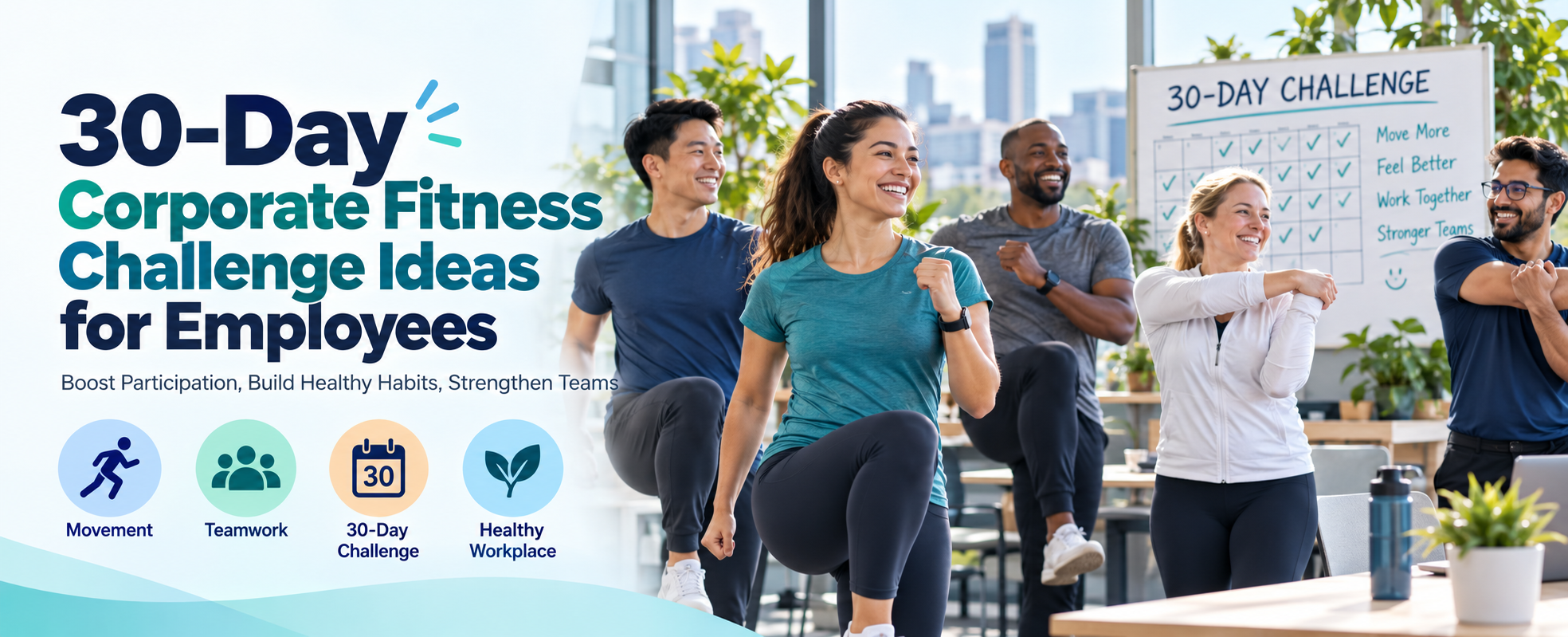
A 30-day corporate fitness challenge is an organized workplace initiative that encourages employees to participate in physical activity over approximately one month.
Challenges may involve walking, running, stretching, mobility exercises, strength training, or other suitable movement activities.
The activities can be completed individually, as part of a team, or through a combination of both formats.
Unlike competitive fitness contests that reward only the highest performers, inclusive corporate fitness challenges emphasize regular participation and personal progress.
For example, employees might receive credit for completing a suitable movement session, joining a team walk, or attending a workplace mobility class.
The goal is not to make every employee achieve the same physical performance level.
Instead, the challenge should encourage people to find realistic opportunities for physical activity and develop routines they can maintain beyond the program.
Organizations interested in professionally supported challenges can explore Corporate Fitness Challenges at Run Fit Well.
Why Should Companies Organize a 30-Day Fitness Challenge?
A month-long fitness initiative can provide structure and a shared goal for workplace wellness activities.
However, results depend on accessibility, program design, employee interest, and implementation.
1. Encourage Consistent Physical Activity
Employees may struggle to prioritize movement because of meetings, commuting, and other responsibilities.
A challenge provides reminders and opportunities to incorporate appropriate activities into daily routines.
Even short movement sessions can help employees become more aware of their activity habits.
2. Create Opportunities for Team Engagement
Group challenges encourage employees to interact outside their usual responsibilities.
Participants might join walking groups, attend mobility sessions, or contribute to team participation goals.
These activities can help colleagues connect across departments.
3. Support Different Fitness Levels
A flexible challenge allows employees to select activities based on their abilities and preferences.
For example, one employee might enjoy running, while another prefers walking or seated movement exercises.
Both should have meaningful opportunities to participate.
4. Introduce Employees to Workplace Wellness
A 30-day campaign can be a practical starting point for companies considering ongoing wellness initiatives.
Employee feedback can help identify which activities might be suitable for recurring sessions.
5. Build Awareness of Healthier Routines
A structured challenge can introduce simple habits, such as moving during breaks, adding short walks, or participating in accessible group exercise.
These activities may support healthier routines, although completing a 30-day challenge does not guarantee lasting behavior change.
How to Plan a Successful 30-Day Workplace Fitness Challenge
Before launching your challenge, make sure the program fits your workforce.
Define the Main Objective
Decide what your organization wants to achieve.
Possible objectives include:
- Encouraging voluntary physical activity
- Increasing participation in workplace wellness initiatives
- Creating opportunities for team interaction
- Introducing beginner-friendly movement
- Understanding employee interest in future fitness programs
A clear objective makes the challenge easier to organize and evaluate.
Understand Employee Preferences
Consider sending a short voluntary survey asking employees about preferred activities, convenient times, and accessibility needs.
Avoid collecting unnecessary medical information or personal fitness measurements.
Select the Challenge Format
Choose whether activities will be completed individually, in teams, onsite, outdoors, or virtually.
A hybrid format can provide flexibility for employees working in different locations.
Establish Inclusive Participation Rules
Employees should be able to select appropriate activities rather than being expected to meet identical exercise targets.
Avoid rewarding only speed, distance, weight loss, or physical performance.
Recognition can instead focus on voluntary participation and consistency.
Prepare a Simple Tracking System
Companies can track completed activities through a voluntary form or wellness participation platform.
Collect only the information needed to evaluate participation.
Individual health details should not be publicly displayed.
30-Day Corporate Fitness Challenge Calendar
The following calendar provides an adaptable starting framework.
It includes movement, mobility, optional group activities, and recovery days.
Important: The activities are examples, not mandatory exercise prescriptions. Employees should select appropriate intensity and alternatives based on their individual circumstances.
Week 1: Start With Simple Movement Habits
Goal: Introduce the challenge and make participation easy for beginners.
Day 1 — Welcome and Personal Goal Setting
Introduce the challenge, explain the rules, and encourage employees to choose a realistic personal movement goal.
Day 2 — Walking Break Challenge
Invite employees to add a comfortable walking break during their workday. Offer suitable seated or adapted movement alternatives.
Day 3 — Desk Mobility Session
Organize a short voluntary mobility session involving gentle shoulder, neck, and upper-body movements.
Day 4 — Choose Your Activity
Participants select a suitable activity, such as walking, cycling, swimming, or another preferred form of movement.
Day 5 — Team Movement Break
Offer an optional group movement session that employees can join onsite or virtually.
Day 6 — Outdoor Activity Day
Encourage employees to enjoy a suitable outdoor activity if their schedule, location, and conditions allow.
Day 7 — Rest and Reflection
Allow employees to rest or participate in optional gentle movement. Invite them to reflect on what worked during the first week.
The first week should prioritize confidence and accessibility over intensity.
Week 2: Build Consistency and Team Participation
Goal: Help participants maintain momentum through flexible activities.
Day 8 — Personal Movement Goal
Participants choose an achievable movement goal for the day based on their preferences and abilities.
Day 9 — Beginner Strength Session
Offer an optional beginner-friendly strength session with appropriate exercise modifications.
Day 10 — Workplace Walking Group
Organize an optional lunchtime walking group with accessible pace and route options.
Day 11 — Stretch and Mobility Break
Introduce a short guided stretching or mobility session suitable for the participating group.
Day 12 — Team Activity Day
Employees contribute to a shared team participation goal rather than competing for the highest individual totals.
Day 13 — Activity of Your Choice
Participants select a comfortable activity they enjoy.
Day 14 — Recovery and Feedback
Provide a rest option and gather voluntary feedback about the first two weeks.
A successful second week should help employees find activities that fit naturally into their schedules.
Week 3: Explore Different Fitness Activities
Goal: Introduce variety while maintaining accessibility.
Day 15 — Guided Workplace Fitness
Offer a voluntary group fitness session designed for mixed experience levels.
Day 16 — Walking or Walk-Run Activity
Participants choose a comfortable walk, walk-run, or another suitable activity.
Day 17 — Corporate Yoga and Mobility
Introduce a beginner-friendly yoga or mobility session with appropriate modifications.
Day 18 — Movement Break Challenge
Encourage employees to vary their position and incorporate suitable movement breaks during the workday.
Day 19 — Team Wellness Session
Organize an optional team activity, such as a guided outdoor walk or workplace movement session.
Day 20 — Personal Fitness Choice
Employees repeat an activity they enjoyed during the previous weeks or select an alternative.
Day 21 — Rest and Reflection
Provide time for recovery and invite employees to share anonymous feedback.
Companies interested in structured group sessions can explore Workplace Fitness Programs and Corporate Yoga & Mobility through Run Fit Well.
Week 4: Strengthen Habits and Celebrate Participation
Goal: Help employees identify activities they may want to continue after the challenge.
Day 22 — Revisit Your Personal Goal
Encourage participants to review their initial movement goals and adjust them if necessary.
Day 23 — Optional Team Walking Session
Offer a group walking activity with different pace or accessibility options.
Day 24 — Mobility and Recovery Session
Organize an optional guided mobility session focused on comfortable movement.
Day 25 — Beginner-Friendly Group Fitness
Provide a suitable group fitness activity with modifications for different experience levels.
Day 26 — Team Connection Challenge
Encourage employees to participate in an accessible group movement activity or a flexible individual alternative.
Day 27 — Favorite Activity Day
Participants choose the activity they found most enjoyable or convenient during the challenge.
Day 28 — Recovery and Reflection
Offer a rest day and encourage employees to consider which habits they might continue.
Days 29–30: Complete the Challenge
Day 29 — Final Optional Team Wellness Activity
Organize a closing group session, workplace walk, or another appropriate activity.
Recognize employees for participation rather than ranking them by athletic performance.
Day 30 — Celebrate and Collect Feedback
Conclude the challenge with a short appreciation message and voluntary feedback survey.
Review participation trends and invite employees to suggest future wellness activities.
A closing event can create a positive experience without making employees feel judged on their performance.
8 Corporate Fitness Challenge Ideas to Customize Your Program
Companies do not need to follow one fixed challenge format.
The following ideas can be adapted to different workplaces.
1. Workplace Walking Challenge
Encourage regular walking through flexible personal goals.
Avoid requiring the same step count from every participant.
2. Desk Mobility Challenge
Invite employees to join short guided movement breaks throughout the month.
This may be suitable for desk-based teams.
3. Team Participation Challenge
Departments or groups work toward a shared participation goal.
Each suitable completed activity contributes to the team’s progress.
4. Beginner Strength Challenge
Offer appropriately designed strength training sessions with modifications for different abilities.
Participants can focus on learning movement techniques and establishing consistency.
5. Corporate Running Challenge
Create optional walking and running groups for employees interested in building endurance or preparing for a company event.
Explore Corporate Running Programs for supported group activities.
6. Hybrid Employee Movement Challenge
Employees participate from home or the office through flexible movement options.
Virtual mobility sessions or shared participation goals can help distributed teams feel included.
7. Outdoor Workplace Fitness Challenge
Where suitable, organize optional group activities in accessible outdoor spaces.
For San Francisco workplaces, outdoor programming can complement office-based movement sessions.
8. Weekly Wellness Activity Challenge
Offer a different suitable activity each week, such as mobility, walking, beginner strength, or group movement.
This format introduces variety without requiring employees to perform the same exercise every day.
For broader workplace activity inspiration, explore Corporate Wellness Program Ideas for San Francisco Companies.
How to Keep Employees Engaged Throughout the 30 Days
Employee engagement is one of the biggest challenges when organizing a month-long initiative.
Interest may be high during the first week but decline if the program becomes repetitive, inconvenient, or overly competitive.
Keep Communication Simple
Send clear information about upcoming activities and participation options.
Avoid overwhelming employees with unnecessary reminders.
Make Participation Voluntary
Employees should have the freedom to choose whether and how they participate.
Offer alternatives for different abilities and circumstances.
Recognize Consistency, Not Just Performance
Celebrate participation milestones, team cooperation, and positive feedback.
Avoid public leaderboards based solely on steps, exercise intensity, or distance.
Provide Different Activity Options
Not everyone enjoys running or high-intensity workouts.
Walking, mobility, yoga, gentle movement, and other appropriate activities can offer meaningful alternatives.
Encourage Leadership Support
Managers can help by respecting break times and making wellness activities accessible during suitable schedules.
Leadership participation should encourage employees, not pressure them.
Include Remote and Hybrid Employees
Provide virtual sessions or flexible individual activities when possible.
An inclusive challenge should not depend entirely on visiting a physical office.
How to Measure the Success of Your Corporate Fitness Challenge
Evaluating the program helps employers understand whether it met their objectives.
Participation Rate
Calculate the percentage of eligible employees who voluntarily participated.
Participation Rate = (Participating Employees ÷ Eligible Employees) × 100
For example, if 40 out of 100 eligible employees participate, the participation rate is 40%.
Activity Attendance
Review attendance across different sessions.
This can help identify activities employees find practical and enjoyable.
Completion and Continued Participation
Measure how many employees participated across multiple weeks.
Avoid treating missed activities as failure.
Employee Feedback
Ask participants about scheduling, accessibility, enjoyment, and possible improvements.
Anonymous feedback may help identify barriers employees are uncomfortable discussing publicly.
Interest in Future Wellness Activities
Find out whether employees would like recurring fitness sessions, workshops, or future challenges.
High participation alone does not prove improved health, productivity, or employee retention.
The purpose of program evaluation is to understand participation and determine how future initiatives can be improved.
Common Mistakes to Avoid During Workplace Wellness Challenges
Setting the Same Fitness Goal for Everyone
Employees have different abilities, experience levels, and personal circumstances.
Use adaptable goals and suitable alternatives.
Making the Challenge Too Competitive
An overly competitive format may discourage beginners and employees who prefer low-intensity activities.
Emphasize consistency, enjoyment, and voluntary participation.
Ignoring Recovery
Employees should not feel required to perform strenuous activity every day.
Include rest options and flexible activity choices.
Tracking Sensitive Personal Health Data
Avoid requiring employees to share weight, medical history, or personal fitness information.
Collect only the information necessary for managing the challenge.
Failing to Gather Employee Feedback
Without feedback, organizations may not understand why participation increased or declined.
Use the closing evaluation to identify improvements.
Corporate Fitness Challenges in San Francisco and the Bay Area
Organizations across the Bay Area may have different schedules, team sizes, and workplace arrangements.
A suitable challenge should reflect these practical needs.
Run Fit Well supports corporate wellness initiatives in:
For example, an office-based team may prefer guided onsite movement sessions, while employees working across multiple locations may benefit from hybrid participation.
Businesses should select activity formats based on employee needs and available resources rather than assuming that all organizations in the same city require identical programs.
How Run Fit Well Supports Corporate Fitness Challenges
Run Fit Well helps organizations explore structured, movement-focused workplace wellness initiatives.
Led by coach Edvandro Oliveira, the business offers corporate fitness challenges and related services designed around company goals, employee participation, and workplace schedules.
Depending on the program, organizations can explore:
- Employee movement challenges
- Team-based activity formats
- Beginner-friendly fitness sessions
- Workplace walking and running activities
- Yoga and mobility sessions
- Short wellness campaigns
- Onsite, outdoor, virtual, or hybrid delivery
Companies may begin with a focused challenge or combine activities with ongoing workplace wellness programs.
Ready to Launch a 30-Day Corporate Fitness Challenge?
A successful 30-day corporate fitness challenge should encourage movement without making employees feel pressured to compete or meet unrealistic standards.
By choosing accessible activities, setting clear goals, providing flexible participation options, and collecting feedback, organizations can create a workplace initiative that employees have a meaningful opportunity to enjoy.
Whether your company wants to introduce movement breaks, organize team challenges, or explore a structured fitness campaign, Run Fit Well can help you discuss suitable programming options.
Explore Corporate Fitness Challenges at Run Fit Well or contact the team to discuss your company’s goals.
Frequently Asked Questions
What is a 30-day corporate fitness challenge?
It is a workplace initiative that encourages employees to participate in suitable physical activities over approximately one month, often through individual goals, team activities, or a combination of both.
How do you organize a corporate fitness challenge?
Start by understanding employee preferences, defining a goal, choosing accessible activities, establishing participation guidelines, communicating the schedule, and preparing a simple evaluation process.
What are good fitness challenge ideas for employees?
Examples include walking challenges, workplace mobility sessions, beginner fitness activities, team participation goals, outdoor activities, and voluntary running groups.
Should employees exercise every day during a 30-day challenge?
No. A challenge can include recovery days, rest options, and flexible movement activities. Employees should select activities appropriate for their abilities and circumstances.
Can remote employees participate in workplace fitness challenges?
Yes. Hybrid and virtual formats can allow employees to participate through flexible movement goals, online sessions, and shared team activities.
How do you motivate employees during a fitness challenge?
Offer accessible activities, communicate clearly, recognize participation, provide different activity options, and collect feedback. Avoid pressuring employees to compete.
How do you measure the success of a workplace fitness challenge?
Employers can track voluntary participation, attendance, continued engagement, employee satisfaction, and interest in future wellness activities.
How many employees are needed for a corporate fitness challenge?
There is no universal minimum. Activities can be designed for smaller teams or larger organizations depending on the available resources and program format.