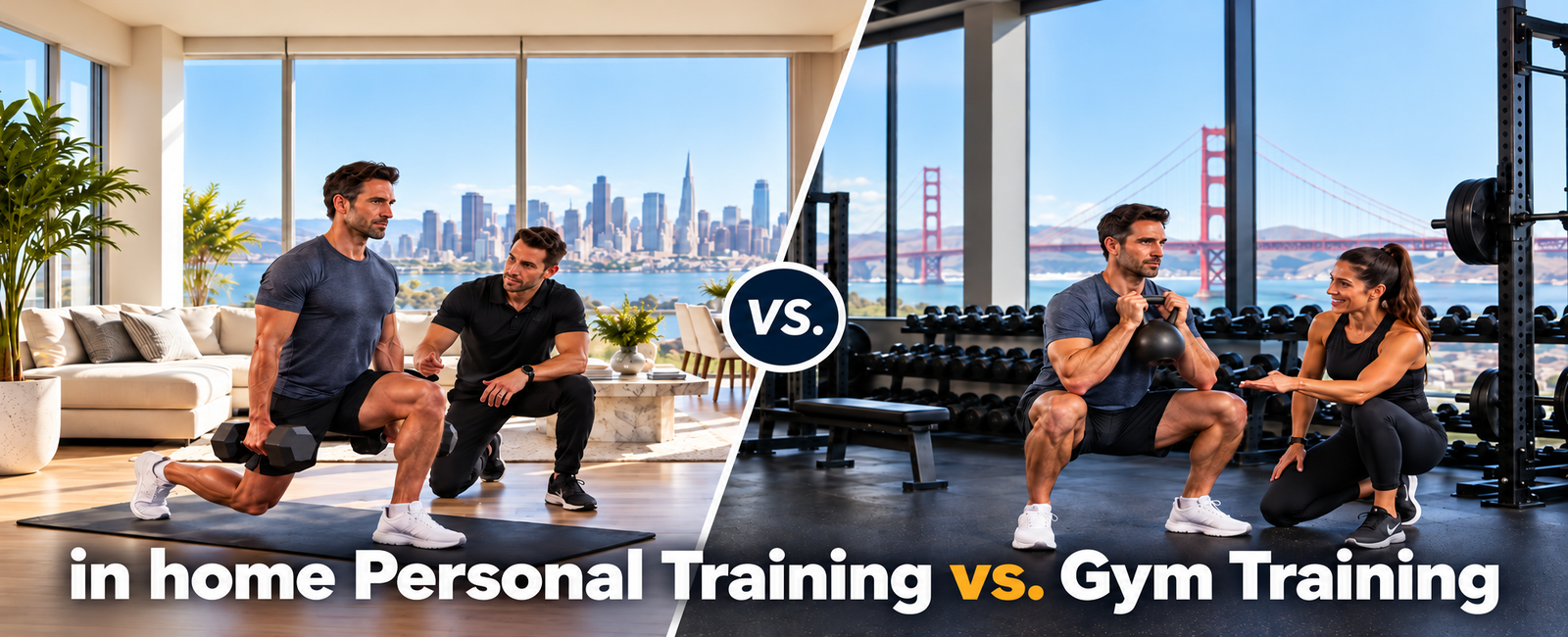
In-home personal training and gym training can both support fitness goals. Run Fit Well works from the principle that the best training environment is the one that makes a well-designed program easier to follow. Here is how the two options compare.
What Is In-Home Personal Training?
In-home personal training brings the coaching session to your home or another agreed private setting. Sessions may use bodyweight exercises, resistance bands, dumbbells, kettlebells, benches, or other compact equipment. A good coach can build a complete strength, mobility, and conditioning session without needing a large commercial gym.
For an external reference, the CDC’s guide to physical activity explains that bodyweight movements, resistance bands, and weights can all count towaard muscle-strengthening activity, whether you exercise at home or in a gym.
Benefits of In-Home Personal Training
Convenience
Removing the commute can make in-home personal training easier to fit around work, family, and other responsibilities. For busy professionals, saving travel time may be the difference between exercising consistently and skipping sessions.
Privacy
Some people feel more comfortable learning exercises in a private environment. This can be especially useful for beginners, people returning after a long break, or clients who simply do not enjoy crowded gyms.
Personalized Use of Your Space
With in-home personal training, a coach can help you make better use of the equipment and space you already have. Even a small area can support productive strength, mobility, and conditioning sessions when exercises are chosen intelligently.
Fewer Distractions
Home sessions remove waiting for equipment, navigating crowded areas, and dealing with a noisy environment. Each session can stay focused on your plan.
Benefits of Gym Training
More Equipment
Commercial gyms typically offer a wider range of barbells, machines, cable stations, cardio equipment, benches, and heavier weights. This can be useful for clients whose goals require a larger variety of resistance or more specialized equipment.
Training Atmosphere
Some people enjoy being surrounded by others who are exercising. The gym environment can create a sense of routine and separation from work or home life.
Easy Progression for Strength Goals
If your goal includes progressively lifting heavier loads, a well-equipped gym can make it easier to increase resistance in small increments and access more exercise variations.
Which Option Is Better for Beginners?
Both can work well. A beginner who feels intimidated by a busy gym may prefer starting with in-home personal training, while someone who enjoys structured facilities may feel more motivated in a gym. Coaching quality, exercise selection, and progression matter more than the location itself.
Which Is Better for Busy Professionals?
In-home personal training often has an advantage because travel time is reduced. However, if a gym is located in your building, office, or directly along your commute, gym-based sessions may be equally convenient.
Which Is Better for Older Adults?
Home-based sessions can be practical for older adults who prefer familiar surroundings or want to reduce travel. Training can focus on strength, balance, mobility, and everyday movement using simple equipment. Gym training can also work well when the facility is accessible and the client is comfortable there.
The National Institute on Aging’s exercise guidance explains how strength, endurance, and balance activities can help older adults maintain physical function.
Which Is Better for Runners?
Runners can benefit from either setting. Strength training for runners often requires only a modest amount of equipment, so home or outdoor sessions can work well. A gym may be preferable when a runner wants access to heavier strength equipment or cross-training machines.
Questions to Ask Before Choosing
- Which environment makes me more likely to train consistently?
- Do I need specialized or heavy equipment for my goals?
- How much time do I lose traveling to and from the gym?
- Do I prefer privacy or a social training atmosphere?
- Am I comfortable exercising independently between coached sessions?
- What equipment do I already have at home?
Run Fit Well’s Approach
Run Fit Well focuses on building a plan around the person rather than forcing every client into the same environment. In-home personal training and gym-based personal training can be structured around strength, mobility, conditioning, running support, and general fitness, with the training location selected according to practicality and goals.
Frequently Asked Questions
Can you get strong training at home without gym machines?
Yes. Bodyweight exercises, dumbbells, kettlebells, resistance bands, and progressive exercise variations can create a strong program. The right equipment depends on your goals.
Is in-home training good for weight management?
It can support a consistent activity and strength routine. Weight management also depends on nutrition, sleep, daily movement, health factors, and other lifestyle variables.
Is gym training necessary for muscle gain?
Not always. Muscle can be developed with many forms of progressive resistance, but a gym can make heavier loading and exercise variety easier.
Can I combine home and gym training?
Yes. Many clients use coached home sessions plus independent gym or outdoor workouts.