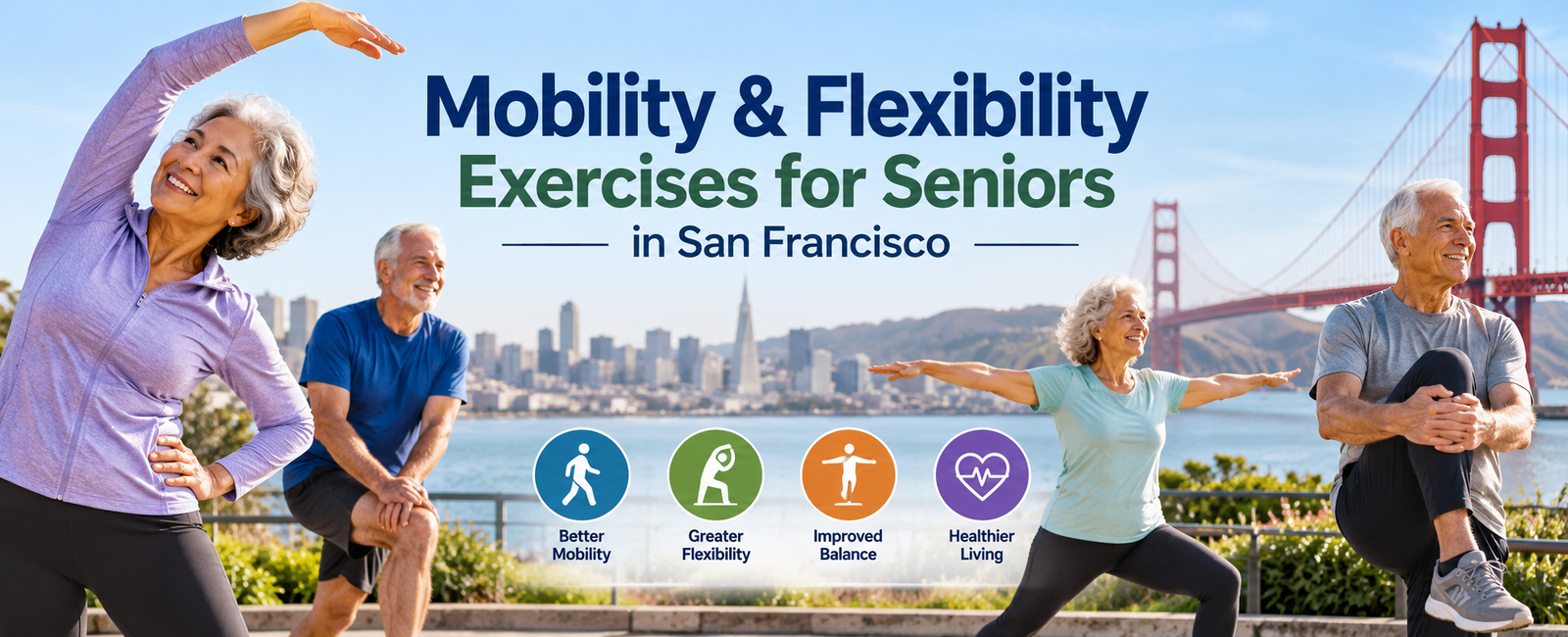
Mobility & Flexibility exercises for seniors support comfortable walking, reaching, bending, standing up, climbing stairs, and other everyday activities. Staying active as you age is about more than strength or cardiovascular fitness.
Regular mobility exercises for seniors can help maintain comfortable joint movement, while flexibility exercises for seniors can help reduce feelings of stiffness and make daily movement feel easier.
The goal of Mobility & Flexibility exercises for seniors is not to force the body into extreme stretches. Simple, controlled movements can support balance, coordination, joint motion, and confidence.
At Run Fit Well, coach Edvandro Oliveira works with older adults in San Francisco to build practical fitness routines based on current ability, movement confidence, and individual goals.
Mobility & Flexibility: What Is the Difference?
Mobility & Flexibility are closely related, but they are not exactly the same. Flexibility refers to how much a muscle or group of muscles can lengthen, while mobility refers to how well you can actively move a joint through a useful range of motion with control.
For example, being able to stretch your hamstrings while seated shows flexibility. Bending, reaching, stepping, or squatting comfortably during everyday movement also requires mobility. That is why a complete routine can include mobility and flexibility exercises for seniors.
Why Mobility Matters for Seniors
As people get older, it is common to notice more stiffness, reduced range of motion, or hesitation with movements that once felt easy. Regular mobility exercises for seniors can help older adults maintain confidence with everyday activities such as getting in and out of a chair, walking, reaching overhead, putting on shoes, turning to look behind, climbing stairs, getting in and out of a car, and carrying everyday items.
Mobility & Flexibility exercises for seniors can complement walking, strength training, balance work, and recreational activities. The objective is not to move like a younger athlete; it is to maintain the movement needed for independence, comfort, and an active lifestyle.
Benefits of Flexibility Exercises for Seniors
Flexibility exercises for seniors can be useful for reducing the feeling of stiffness and improving comfort during movement. Regular stretching may help make it easier to move through everyday positions, especially when combined with strengthening and active mobility exercises.
Potential benefits of Mobility & Flexibility exercises for seniors include movement comfort, useful range of motion, easier daily activities, posture awareness, and reduced feelings of muscular tightness.
Stretching should feel gentle and controlled. Pain is not a sign that the stretch is working better.
How Often Should Seniors Do Mobility Exercises?
Mobility & Flexibility exercises for seniors do not need to form a long workout. Short, comfortable sessions performed regularly can be more practical than occasional lengthy routines.
Many older adults may choose simple movements on most days, depending on their needs and comfort.
A Mobility & Flexibility routine for seniors may take only 10 to 15 minutes. It can fit before a walk, before strength training, after sitting, or in the evening.
The frequency should depend on comfort, medical considerations, and overall activity level.
Best Mobility Exercises for Seniors
The best mobility exercises for seniors are usually simple movements that support everyday life. A routine combining mobility and flexibility exercises for seniors should remain controlled, comfortable, and adjusted to current ability.
1. Seated or Standing Ankle Circles
Ankle circles are a simple starting point for Mobility & Flexibility exercises for seniors. Ankle movement matters for walking, balance, and climbing stairs.
Sit in a chair or hold a stable surface, lift one foot slightly, and slowly circle the ankle in both directions. Let the movement come from the ankle rather than the entire leg.
2. Ankle Pumps
Ankle pumps can help maintain comfortable ankle movement. While seated, place your feet in front of you and alternate between lifting your toes and lifting your heels. Move slowly through a comfortable range, especially after sitting for long periods.
3. Seated Knee Extensions
Seated knee extensions can be included alongside other mobility and flexibility exercises for seniors. Sit tall and slowly straighten one knee to a comfortable position.
Pause briefly, lower the foot, and alternate sides. This combines movement with light muscular activation around the knee and thigh.
4. Sit-to-Stand
The sit-to-stand is a functional addition to mobility and flexibility exercises for seniors because standing from a chair is an everyday movement.
Sit near the front of a stable chair, position your feet comfortably underneath you, lean slightly forward, and stand up with control. Use your hands for support if necessary.
Slowly return to the chair and, as strength and confidence improve, try to use less assistance from the hands.
5. Standing Hip Circles
Hold a chair or stable surface if needed and move your hips gently in small circles, keeping the movement controlled. Reverse direction after several repetitions. Hip circles can help reduce stiffness around the hips before walking or exercising.
6. Marching in Place
Marching helps combine hip mobility, balance, and coordination. Stand near a stable surface if you need support and alternate lifting one knee at a time. Keep the movement comfortable rather than trying to lift the knees as high as possible.
7. Heel-to-Toe Rocking
Stand while holding a stable surface and slowly shift your weight toward your heels and then toward the balls of your feet. This movement helps improve ankle control and awareness and can also be useful as part of a balance routine.
Upper-Body Mobility Exercises for Seniors
Mobility & Flexibility exercises for seniors should also address the shoulders, upper back, and neck. These areas benefit from comfortable movement, particularly after sitting for long periods.
8. Shoulder Rolls
Sit or stand tall and slowly roll your shoulders backward in a smooth circular motion. After several repetitions, change direction. Keep your neck relaxed and avoid forcing the shoulders into a large range.
9. Arm Circles
Extend your arms comfortably to the sides and perform small controlled circles. Gradually increase the size if it feels comfortable, then reverse direction. Arm circles can help prepare the shoulders for reaching and other upper-body movements.
10. Wall Slides
Stand with your back or shoulders near a wall if comfortable. Position your arms in a bent shape and gently slide them upward before returning to the starting position. Only move as far as you can without pain or excessive arching of the lower back.
11. Seated Upper-Back Rotation
Sit tall in a chair with your feet on the floor, cross your arms gently over your chest, and rotate your upper body to one side. Return to the center and rotate to the other side. Avoid forcing the movement; the goal is smooth upper-back rotation.
12. Gentle Neck Rotation
Sit or stand with good posture and slowly turn your head to one side as far as feels comfortable. Return to the center and repeat on the other side. Avoid fast or forceful neck movements.
Best Flexibility Exercises for Seniors
Flexibility exercises for seniors should be gentle, steady, and comfortable. When combining mobility and flexibility exercises for seniors, avoid bouncing into a stretch.
Move into each position gradually and breathe normally.
13. Calf Stretch
Stand facing a wall and place your hands against it. Step one foot backward while keeping the heel toward the floor, bend the front knee slightly, and keep the back leg comfortable. You should feel a gentle stretch through the calf.
14. Seated Hamstring Stretch
Sit near the front of a stable chair and extend one leg forward with the heel on the floor. Keep your back relatively tall and gently hinge forward from the hips until you feel a mild stretch in the back of the thigh. Avoid rounding aggressively or reaching for your toes.
15. Hip Flexor Stretch
Stand in a split stance while holding a stable surface if needed. Keep your body tall and gently shift your hips forward until you feel a stretch through the front of the hip on the back leg. Avoid arching your lower back.
16. Chest Stretch
Stand near a doorway or wall, place one hand or forearm against the surface, and gently rotate your body away until you feel a mild stretch through the chest and front of the shoulder. Keep the shoulder relaxed.
17. Upper-Back Stretch
Sit or stand tall and extend your arms forward. Gently reach your hands away from your body while allowing the upper back to round slightly. You should feel a comfortable stretch across the upper back and shoulders.
18. Side Stretch
Sit or stand with good posture, reach one arm overhead, and gently lean to the opposite side. Keep the movement controlled and avoid twisting, then repeat on both sides.
Mobility Exercises for Balance and Stability
Mobility & Flexibility exercises for seniors can complement balance work. Older adults may benefit from controlled movement and stability practice near a secure support surface.
Supported Single-Leg Stand
Stand beside a chair or counter, shift your weight onto one leg, and lightly lift the other foot. Use your hands for as much support as needed, hold briefly, and then switch sides.
Heel-to-Toe Walk
Walk slowly by placing one foot directly in front of the other. Use a wall or stable surface nearby if additional support is needed.
Side Steps
Take several controlled steps to one side and then return. Keep your feet facing forward and maintain an upright posture. These exercises should always be performed in a safe environment where support is available.
A Simple Daily Mobility Routine for Seniors
A daily Mobility & Flexibility routine for seniors does not need to be complicated. The aim is to finish feeling comfortable, not exhausted.
- Shoulder rolls – 8–10 repetitions
- Gentle neck rotations – 5 each side
- Seated upper-back rotations – 6 each side
- Ankle circles – 8 each direction
- Sit-to-stand – 6–10 repetitions
- Marching in place – 30–60 seconds
- Calf stretch – 20–30 seconds each side
- Seated hamstring stretch – 20–30 seconds each side
- Chest stretch – 20–30 seconds each side
- Supported balance exercise – 15–30 seconds each side
These mobility and flexibility exercises for seniors can be modified based on comfort, experience, balance, and overall ability.
Mobility Before Exercise vs. Stretching After Exercise
The timing of mobility and flexibility exercises for seniors can influence which movements you choose. Before activity, controlled movements such as marching, arm circles, ankle movements, hip circles, sit-to-stands, and gentle rotations may help prepare the body.
After exercise or during a separate session, slower stretches for the calves, hamstrings, chest, and hips may be appropriate. In this way, mobility and flexibility exercises for seniors can serve different purposes within one routine.
Common Mobility & Flexibility Mistakes
Stretching Through Pain
Mobility & Flexibility exercises for seniors should not cause sharp pain. A stretch may create mild tension, but more discomfort does not mean more benefit.
Holding Your Breath
Try to breathe normally throughout Mobility & Flexibility exercises for seniors. Relaxed breathing can make it easier to avoid unnecessary tension and maintain control.
Moving Too Fast
Mobility and flexibility exercises for seniors should generally be slow and controlled. Fast or jerky movements can make balance and technique harder to maintain.
Stretching Without Strengthening
Flexibility alone does not create complete movement control. Strength training for seniors can help your body actively control the ranges of motion you are developing.
Comparing Your Range of Motion to Someone Else
Everyone has a different movement history and body structure. The goal should be improving your own comfort and function rather than achieving a specific stretching position.
Combining Mobility With Strength Training
Mobility & Flexibility exercises for seniors can complement appropriate strength training for seniors. For example, hip mobility may support comfortable movement, while leg and hip strength can help control walking, standing, and stair climbing.
A balanced senior fitness routine may include mobility and flexibility exercises for seniors alongside strength training, balance exercises, walking, or other cardiovascular activity. These elements support each other.
Mobility for Seniors Who Sit for Long Periods
Long sitting periods can leave the hips, ankles, shoulders, and upper back feeling stiff. Short breaks with mobility and flexibility exercises for seniors may be convenient throughout the day.
A simple movement break might include standing up from the chair, walking around the room, shoulder rolls, ankle pumps, gentle upper-back rotations, and marching in place. Even a few minutes of movement can help break up long periods of inactivity.
When Should Seniors Modify an Exercise?
Mobility and flexibility exercises for seniors should be modified if they cause pain, feel unstable, or require more balance than you have. Options include sitting, using stable support, reducing the movement range, doing fewer repetitions, or slowing down.
Progression should happen gradually. There is no benefit in rushing into a harder version before you are ready.
When to Seek Professional Guidance
If you have significant pain, dizziness, unexplained weakness, a recent injury, surgery, or a medical condition that affects movement, speak with an appropriate healthcare professional before beginning a new exercise program.
A qualified fitness professional can help adapt mobility and flexibility exercises for seniors to current ability. The goal should always be safe, confident movement.
Mobility & Flexibility Training With Run Fit Well
At Run Fit Well, senior fitness programs are designed around the individual rather than a one-size-fits-all workout. Coach Edvandro Oliveira works with older adults to build practical programs based on current mobility, strength, balance, confidence, and personal goals.
Depending on your needs, training may include mobility and flexibility exercises for seniors, strength training, balance work, walking, conditioning, and functional movement. The objective is comfortable, confident movement in everyday activities, not extreme flexibility.
Final Thoughts
Mobility & Flexibility exercises for seniors in San Francisco can be an important part of maintaining an active lifestyle. Regular mobility work can support everyday movements such as walking, standing up, reaching, turning, and climbing stairs, while flexibility exercises can help reduce the feeling of stiffness and improve movement comfort.
The best routine is usually simple, controlled, and consistent. You do not need long stretching sessions or complicated exercises. Focus on movements that feel useful, progress gradually, combine mobility with strength and balance work, and choose exercises that match your current ability. The goal is not to become extremely flexible; it is to keep moving comfortably and confidently as you age.
Frequently Asked Questions
What are the best mobility exercises for seniors?
Useful mobility exercises for seniors include ankle circles, sit-to-stands, marching, shoulder rolls, upper-back rotations, hip movements, and controlled balance exercises.
How often should seniors do mobility exercises?
Many gentle mobility exercises can be performed regularly, even daily, depending on comfort, activity level, and individual health considerations.
What is the difference between mobility and flexibility?
Flexibility refers mainly to how much a muscle can lengthen, while mobility refers to the ability to actively move a joint through a useful range of motion with control.
Is stretching good for older adults?
Gentle stretching can help maintain movement comfort and reduce the feeling of muscular stiffness when performed appropriately.
Can mobility exercises improve balance?
Some mobility exercises can support balance when combined with strength, stability, and coordination work.
Should seniors stretch before or after exercise?
Controlled dynamic movements are often useful before activity, while slower static stretches may fit better after exercise or during a separate flexibility session.
Does Run Fit Well offer senior mobility training in San Francisco?
Yes. Run Fit Well provides personalized senior fitness coaching, and Edvandro Oliveira can build a program that includes mobility, flexibility, strength, balance, and functional movement based on individual needs.