A successful corporate wellness workshop should not end when the session finishes.
The first few weeks after the workshop are when employees decide whether the ideas they learned can realistically fit into their workday. Without follow-up, even a strong session can quickly be forgotten.
A simple 30-day plan can help employees put one or two practical ideas into action, give managers a clear role in supporting participation, and help HR understand what should happen next.
This approach works especially well for wellbeing workshops for employees, where the goal is not just to deliver information but to encourage small, realistic changes that employees can actually use.
Within Two Days, Share One Practical Action
Send a short follow-up while the workshop is still fresh in employees’ minds.
Avoid sending a long recap filled with too many ideas. Instead, choose one action employees can try during a normal workday.
For example, after a mobility-focused corporate wellness workshop, the message could say:
“Try a two-minute movement break after one of your regular meetings this week.”
That is simple, specific, and easy to test.
Include one short resource employees can revisit, such as a one-page guide, video, or approved recap from the facilitator.
Make sure employees who missed the session can still participate without feeling that they need to catch up on the entire workshop first.
Make the Follow-Up Easy to Use
Employees are more likely to revisit a resource when it is quick to understand.
Instead of distributing a large slide deck, create a short recap that fits on one screen.
Include:
- The activity employees were encouraged to try
- A shorter or easier option
- Where to find more information
For workplace wellbeing workshops, this kind of follow-up is often more practical than sending every slide from the original presentation.
If the facilitator provided movement instructions, confirm that the wording is accurate before distributing it.
Also consider how different employees access internal resources. Some teams may use an intranet, while others may rely on email, messaging platforms, or printed materials.
Use the channel employees already check regularly.
In Week Two, Help Managers Create Space
One of the biggest barriers to employee participation is often time.
Even when employees like the ideas presented during corporate wellbeing workshops, back-to-back meetings and busy schedules can make it difficult to use them.
Managers can help by creating a small amount of space.
For example, a team lead could end a longer meeting a few minutes early and say:
“We’re leaving the last few minutes open for anyone who wants to take a short movement or reset break.”
Participation should remain optional.
The goal is not to force a wellness activity into the schedule. It is to make it easier for employees who want to participate.
A small scheduling change can make wellbeing workshops for employees more useful long after the original session is over.
Give Managers a Simple Script
Managers do not need to become wellness experts.
Give them a short message they can adapt.
For example:
“We’re trying to create a little more room between longer meetings this week. Use that time in whatever way works best for you. The workshop recap includes a few movement options if you want to try them.”
If several departments attended the same corporate wellness workshop, provide the same core message to each team lead.
That creates a more consistent experience while still allowing managers to adapt the wording to their team.
In Week Three, Ask What Is Getting in the Way
By the third week, employees have had enough time to test the idea.
Now ask one simple question:
“What made this difficult to fit into your workday?”
Keep the response optional.
Look for practical barriers such as:
- Back-to-back meetings
- Limited space
- Forgotten instructions
- Unclear examples
- Timing that does not fit certain teams
- Remote or hybrid work schedules
The goal is not to measure satisfaction for the sake of collecting feedback.
The goal is to identify something you can actually improve.
This is especially important for workplace wellbeing workshops, because the same activity may work well for one team and poorly for another simply because their schedules and working environments are different.
Make Feedback Lead to a Decision
Avoid asking broad questions that do not help you decide what to do next.
Instead of asking only:
“Did you enjoy the workshop?”
Ask something more practical, such as:
“Would a shorter reminder, clearer example, or different time make this easier to use?”
This gives HR useful information.
If employees say they forget the activity, make the recap easier to find.
If they say meetings leave no time, ask managers whether a small calendar change is possible.
If employees want a clearer demonstration, work with the facilitator to create one short reusable explanation.
Good follow-up turns corporate wellbeing workshops into an ongoing learning process instead of a one-time event.
Let Employees Choose What Works for Them
At the end of the original workshop, employees should ideally leave with one action they can test.
Give them several options.
One employee may choose to stand up after finishing a recurring meeting.
Another may prefer a short seated movement break before opening the afternoon calendar.
Someone else may choose a short breathing or reset activity.
The goal is not for every employee to do the same thing.
Effective wellbeing workshops for employees give people practical choices they can adapt to their own schedule, workspace, and comfort level.
Employees should know when and how they can try the activity before leaving the session.
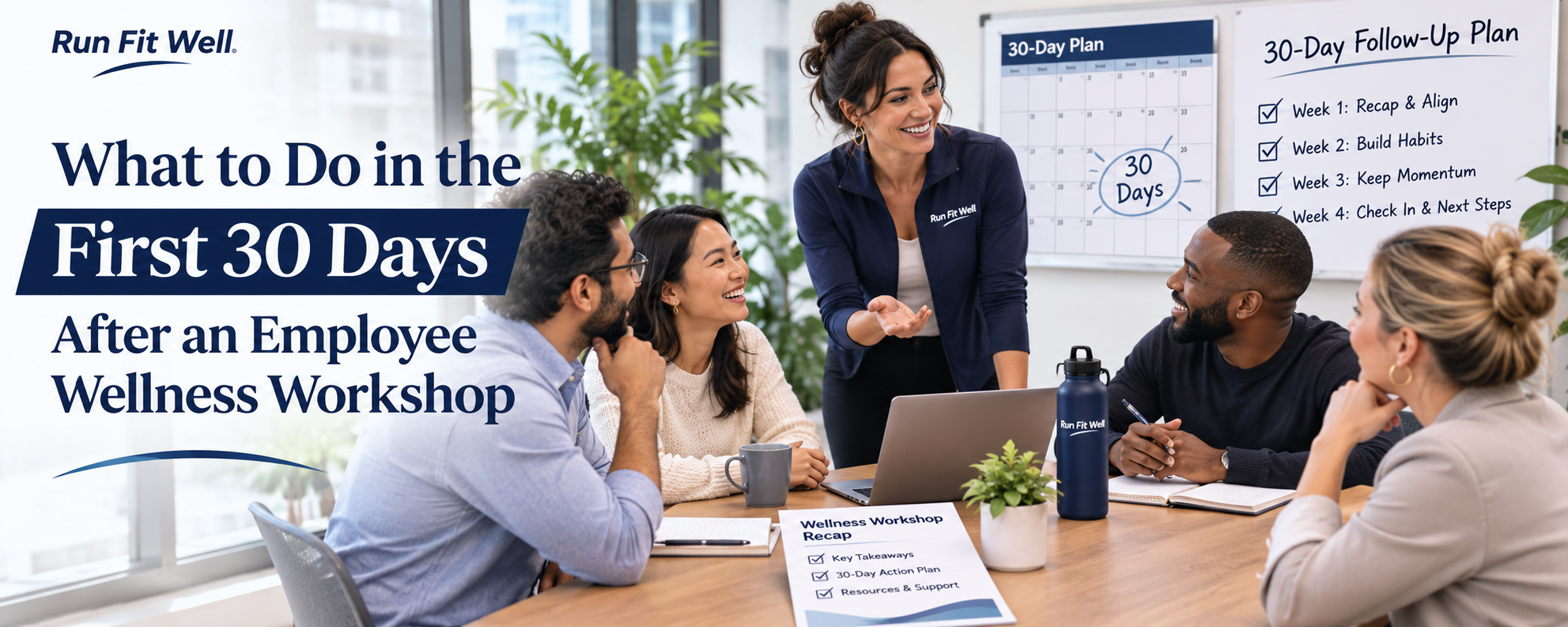
Use a Four-Week Follow-Up Plan
A simple 30-day structure keeps the follow-up manageable.
Week One: Reinforce One Action
Send the recap and ask employees to try one practical idea from the workshop.
Keep the message short and easy to revisit.
Week Two: Create Space
Ask managers to support participation through one small scheduling change where appropriate.
This could mean ending a recurring meeting a few minutes early or protecting an existing break.
Week Three: Identify Friction
Ask employees what made the activity difficult to use.
Focus on barriers that HR or managers can realistically address.
Week Four: Decide What to Keep
Review what employees found useful and decide what should continue.
The organization might keep a movement break, update the recap, change the timing, or invite the facilitator back for a focused follow-up session.
This simple structure can make corporate wellness workshops easier to repeat and improve over time.
Create a Follow-Up Resource Employees Can Actually Use
The best workshop recap is usually short.
A useful one-page resource can include:
- One main activity
- One easier alternative
- One reminder about when to use it
- A link or location for additional guidance
Keep the language simple.
Employees should not need to read a long document before understanding what to do.
If your workplace wellbeing workshops involve several office locations or departments, use the same core resource but allow each team to adapt the timing or activity cue.
Work Through a Practical Example
Imagine an office runs a workshop about movement breaks during long desk-based workdays.
During the first week, HR sends a short recap and invites employees to try one movement option after a regular meeting.
In week two, two managers leave the final few minutes of a weekly call open for an optional break.
By week three, employees report that they remember the activity but often do not have enough space to stand away from their desks.
HR updates the recap to include a seated option.
At the end of the month, the company keeps the small scheduling change and updates the workshop materials before introducing the session to another office.
This is the kind of practical follow-up that makes corporate wellbeing workshops more useful across different teams.
In Week Four, Decide What Should Continue
The final week should lead to a clear decision.
Review:
- Which action employees tried
- What they found useful
- Which barriers appeared
- What managers changed
- What should continue
The company may decide to keep a recurring movement break, share a short resource periodically, offer another session, or introduce a different topic.
If the original corporate wellness workshop worked well, the next step might be a follow-up session that goes deeper into the same topic.
If participation was limited, it may be better to adjust timing, format, or communication before repeating the workshop.
Prepare a Short Handover for the Next Organizer
If another HR manager, office lead, or location will run the next session, give them a short handover.
Include:
- The workshop topic
- The action employees were asked to try
- The follow-up message
- Where the recap is stored
- What employees found difficult
- Any scheduling changes managers kept
- Any questions employees asked
This makes future workplace wellbeing workshops easier to organize.
Do not make the next team rebuild the follow-up process from the beginning.
If the next workshop covers a different topic, keep the same follow-up structure and change only the activity.
Questions About Employee Wellness Workshop Follow-Up
What if Very Few Employees Respond to the Feedback Question?
First, check whether employees actually received the message and whether responding was easy.
You can also ask a few managers whether they noticed scheduling or participation barriers.
Use that information to make a small adjustment rather than assuming employees were not interested.
Should We Send a Reminder Every Week?
Not necessarily.
Too many reminders can make a simple wellness activity feel like another workplace obligation.
For many corporate wellness workshops, one launch message, one well-timed reminder, and one closing update may be enough.
Match the frequency to the activity and the communication channels your employees already use.
What Can We Share With Another Office?
Share the editable recap, manager script, timing recommendations, and a short summary of what employees found difficult.
The new office can then adapt the activity to its own meeting patterns, shifts, and work environment.
How Often Should Corporate Wellbeing Workshops Be Held?
There is no single schedule that works for every organization.
Some teams may benefit from a monthly or quarterly workshop series, while others may prefer occasional sessions tied to specific employee needs.
The important thing is to allow enough time between corporate wellbeing workshops for employees to try what they learned and for HR to review feedback.
What Makes Workplace Wellbeing Workshops More Effective?
The workshop should give employees something practical they can use immediately.
Clear follow-up, manager support, simple resources, and voluntary participation can make workplace wellbeing workshops easier to apply in everyday work.
Plan the Follow-Up Before the Next Corporate Wellness Workshop
The follow-up plan should be decided before the workshop begins.
Choose one action employees can try soon after the session, decide where the recap will be stored, and assign responsibility for follow-up communication.
Run Fit Well can help organizations plan corporate wellness workshops, wellbeing workshops for employees, and practical workplace wellness sessions around team schedules and working environments.
By combining a useful session with a clear 30-day follow-up plan, organizations can make corporate wellbeing workshops more practical, repeatable, and easier for employees to apply during the workday.